
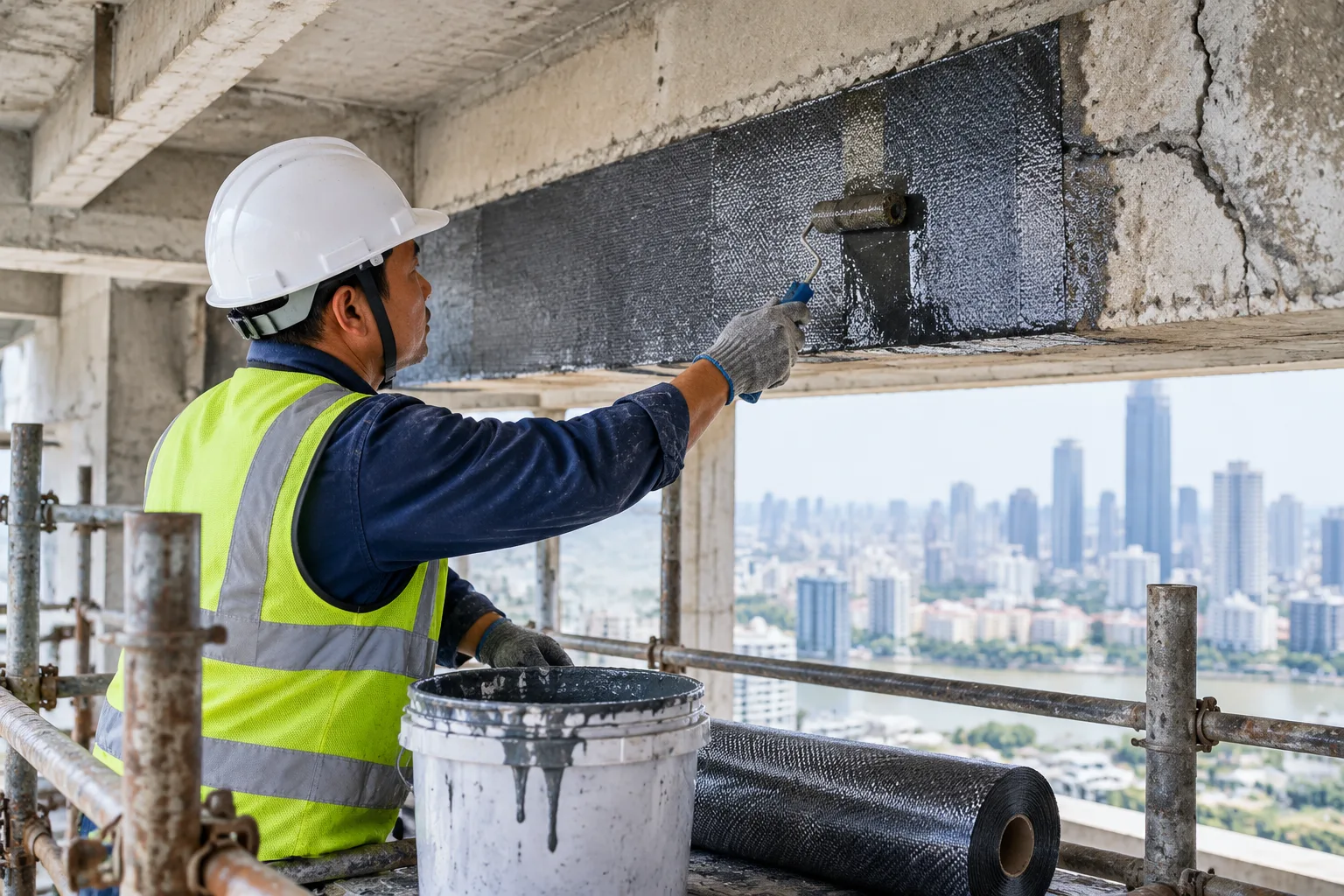
 01
01 CFRP & bonded strengthening
Carbon-fibre fabric, laminates and bonded steel solutions for beams, slabs and columns.
Structural strengthening • Kenya
Integrated inspection, design and construction services
From structural defects and engineering assessment to strengthening design, specialist construction and documented handover.
AI concept image • representative strengthening work Built around your project
Choose the path that matches your building challenge. We coordinate investigation, engineering, materials, site controls and handover around a clear scope.
What we do
We focus on targeted interventions that improve capacity, durability and safe use while limiting disruption to building operations.
01 Carbon-fibre fabric, laminates and bonded steel solutions for beams, slabs and columns.
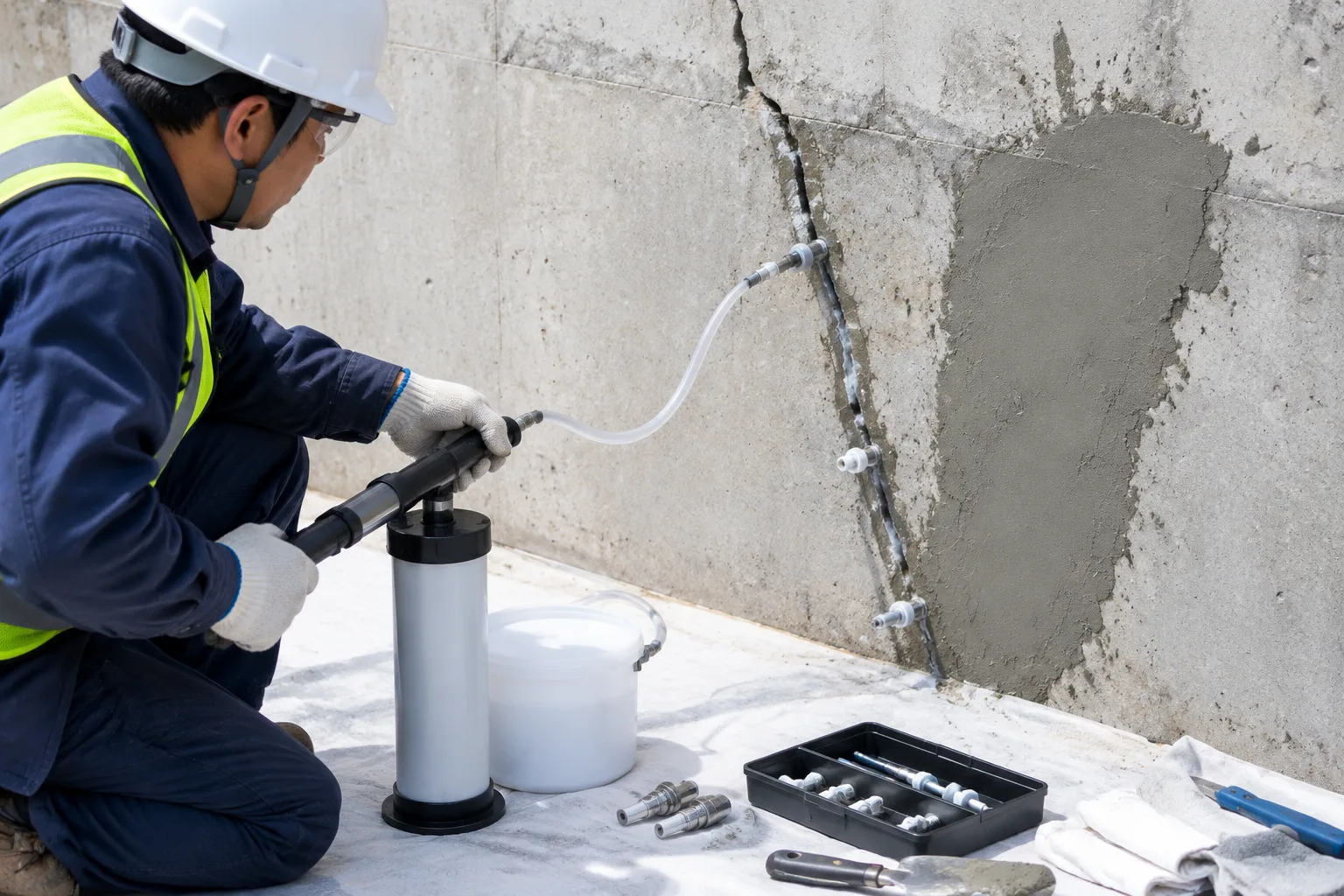 02
02 Crack mapping, resin injection, corrosion treatment, patch repair and protective reinstatement.
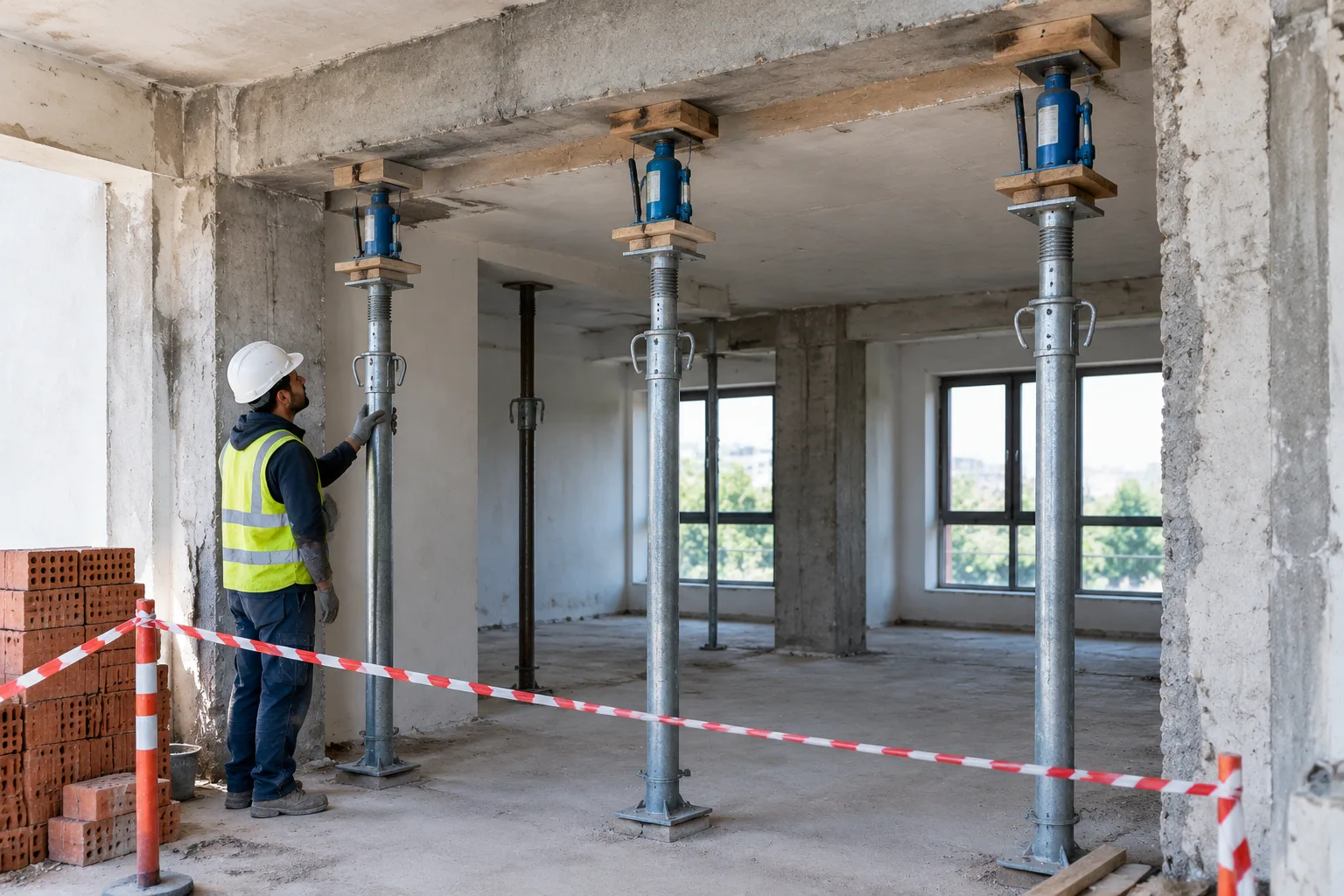 03
03 Structural support for openings, wall removal, higher loads, equipment installation and refurbishment.
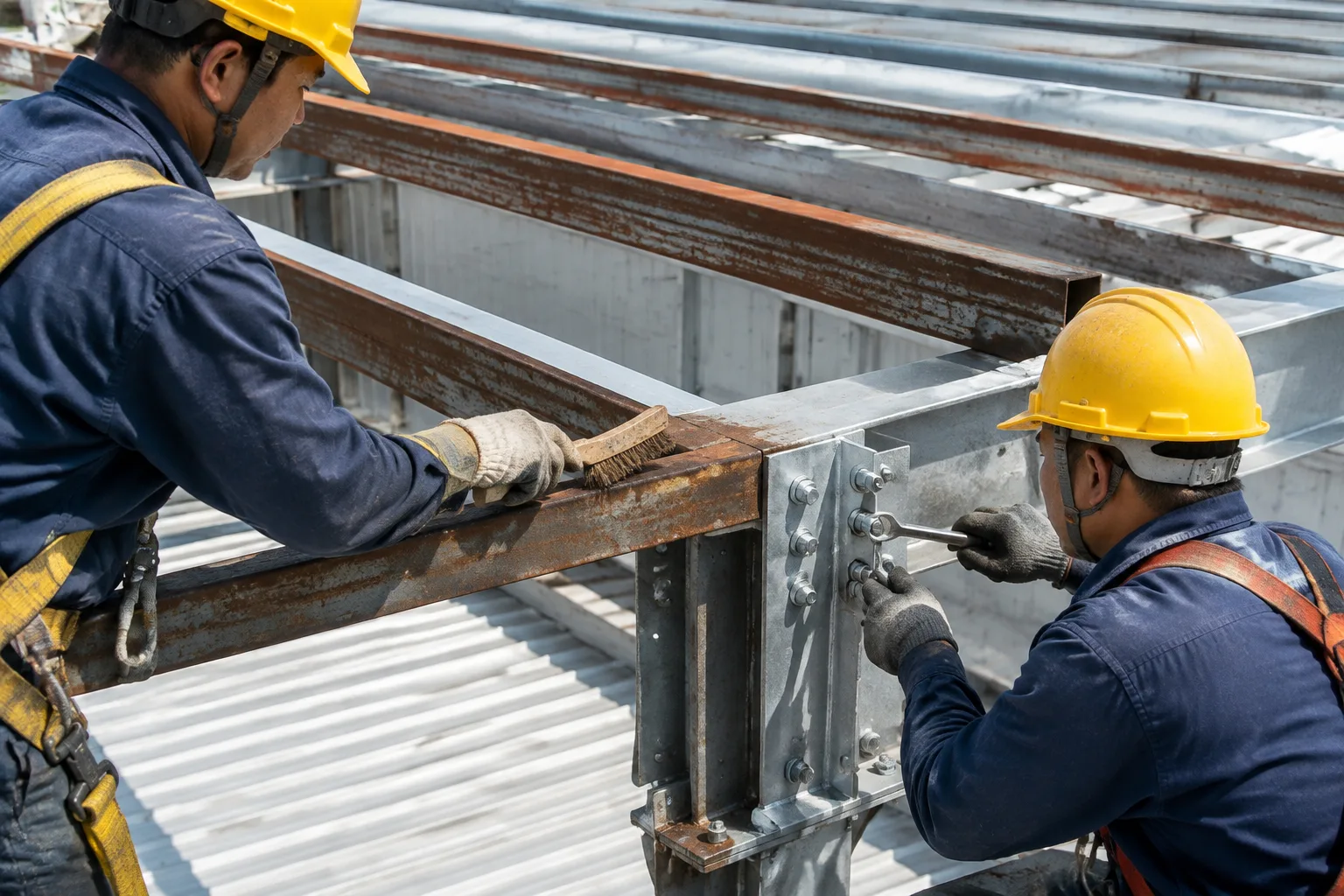 04
04 Assessment coordination and reinforcement of purlins, beams, bracing and connections.
 05
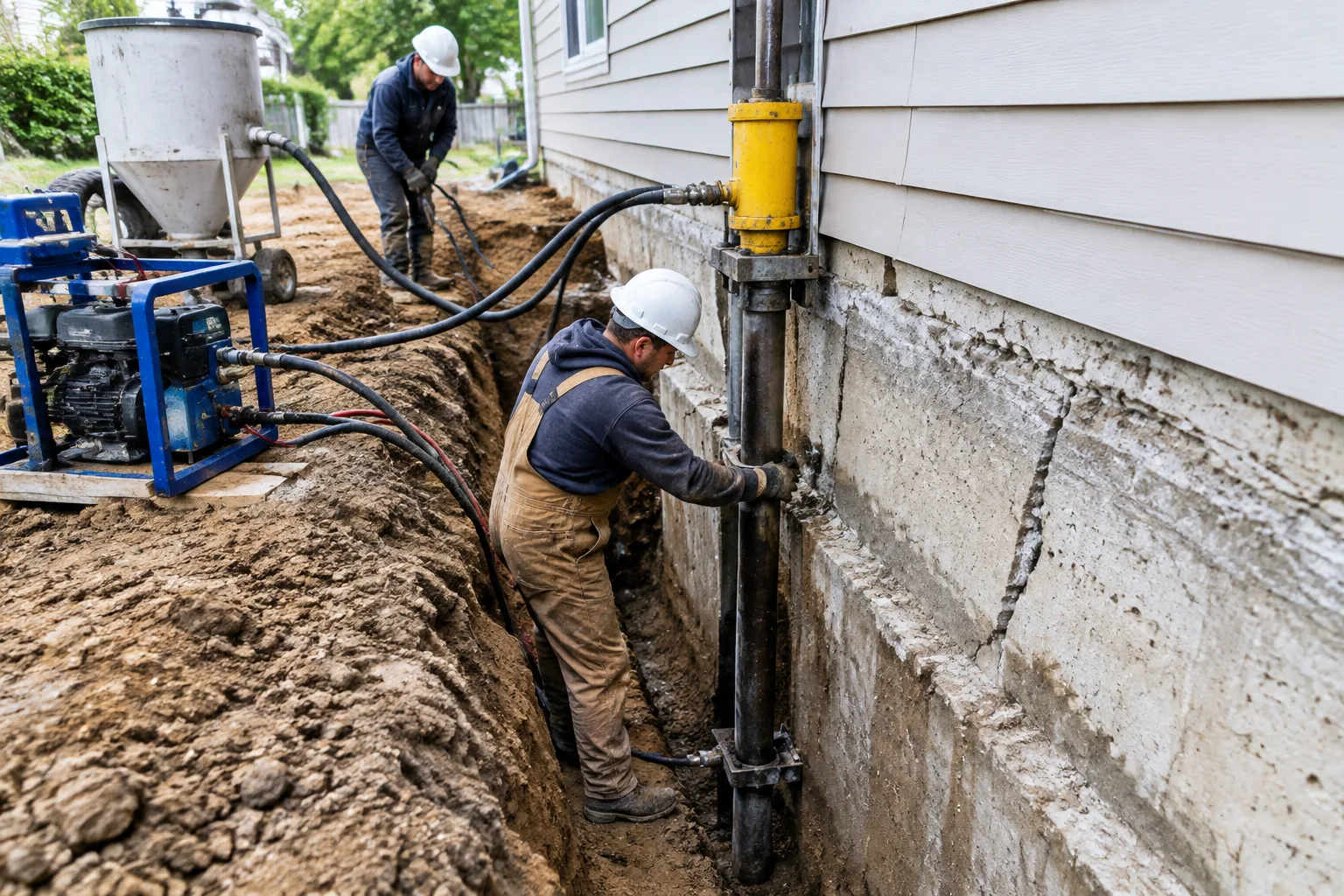
05 Investigation support, underpinning concepts, foundation strengthening and settlement-related repairs.
 06
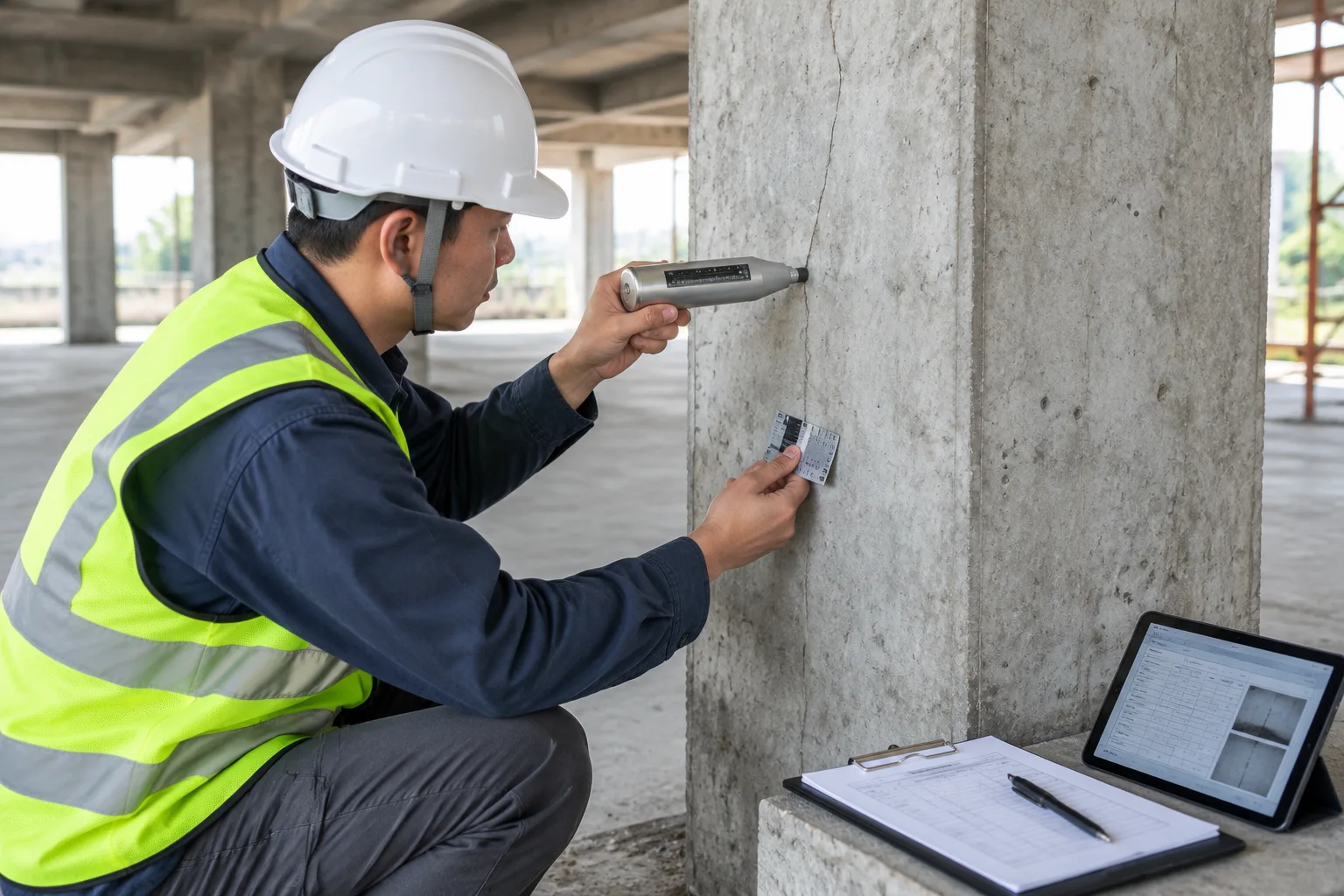
06 Site records, material traceability, hold points, testing coordination and structured handover.
Professional strengthening technologies
Each technique is selected after inspection and engineering review. The examples below show typical quality conditions that may require the corresponding intervention.
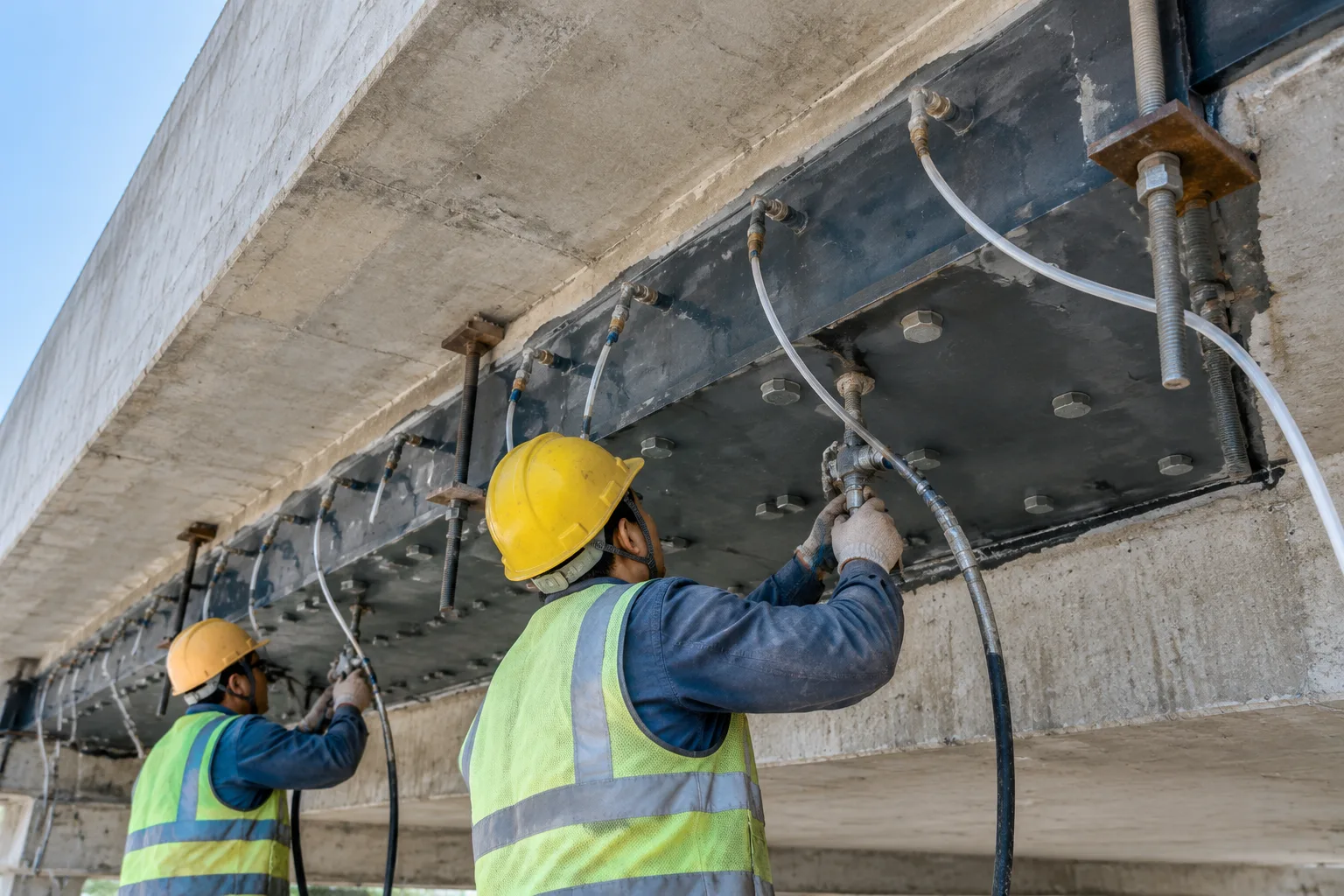 01
01Typical condition: Beam or slab capacity is inadequate, with limited space for heavy rebuilding.
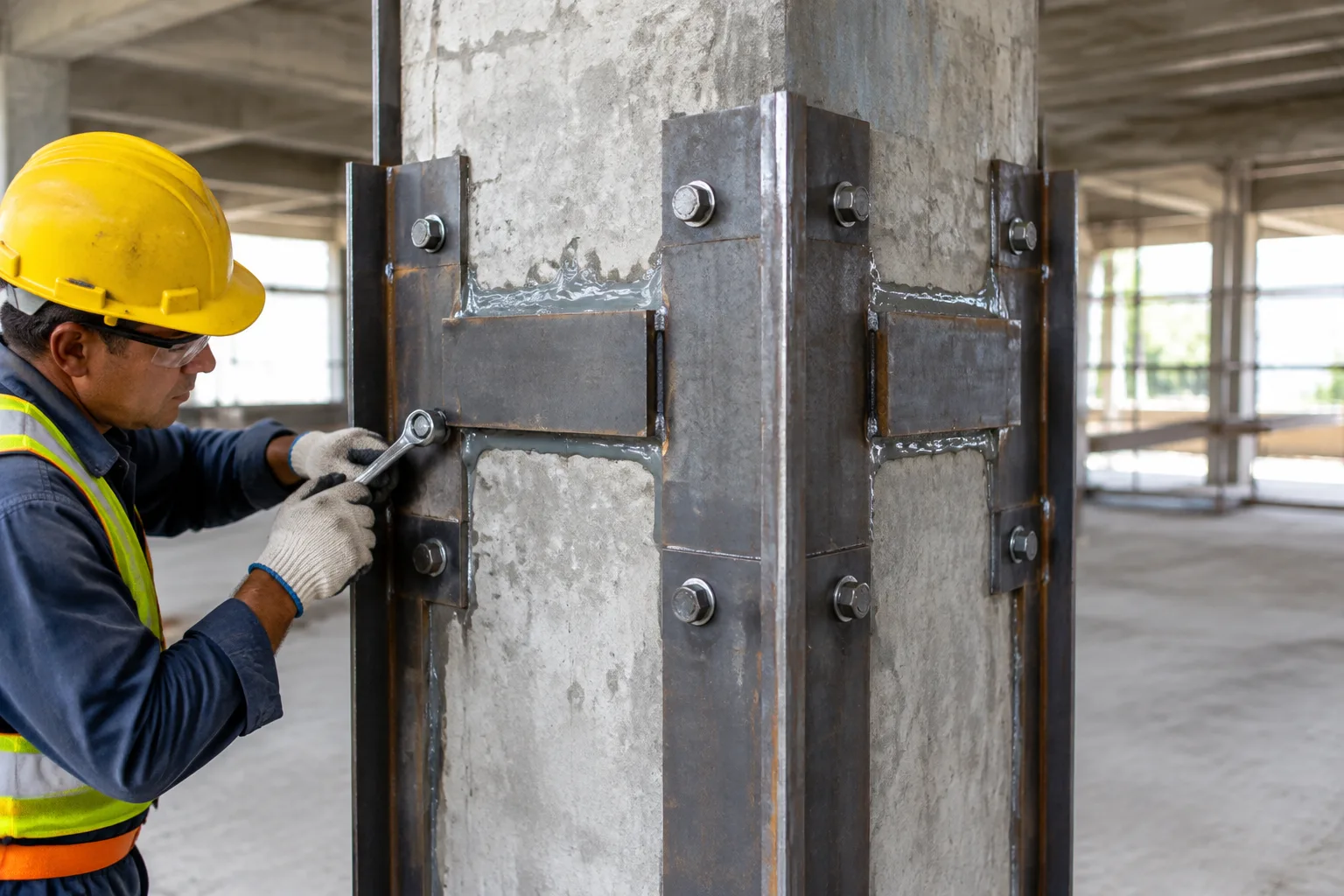 02
02Typical condition: Local bending or shear deficiency, overloaded members or damaged concrete sections.
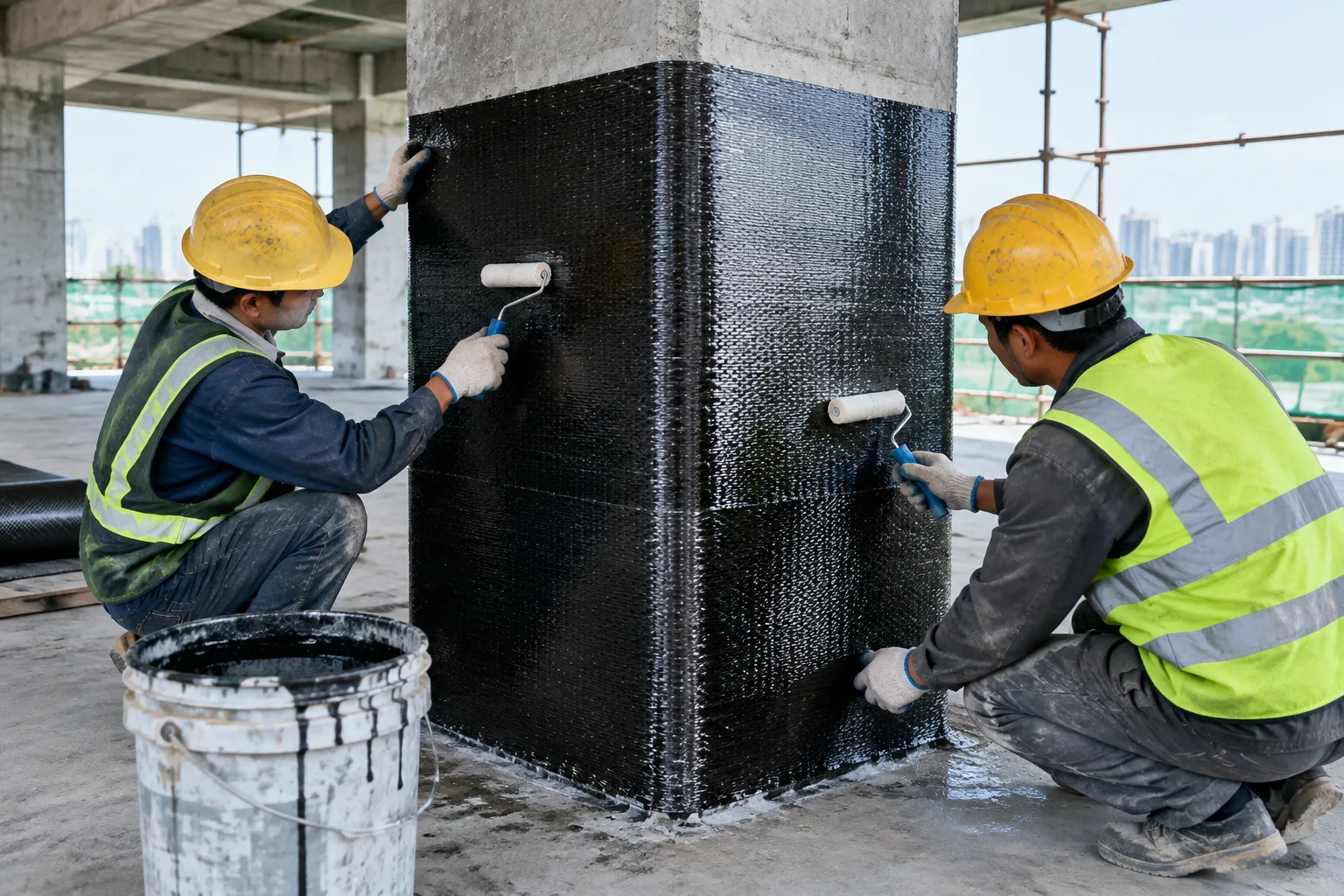 03
03Typical condition: Cracked beams, slabs or columns requiring lightweight capacity improvement with minimal disruption.
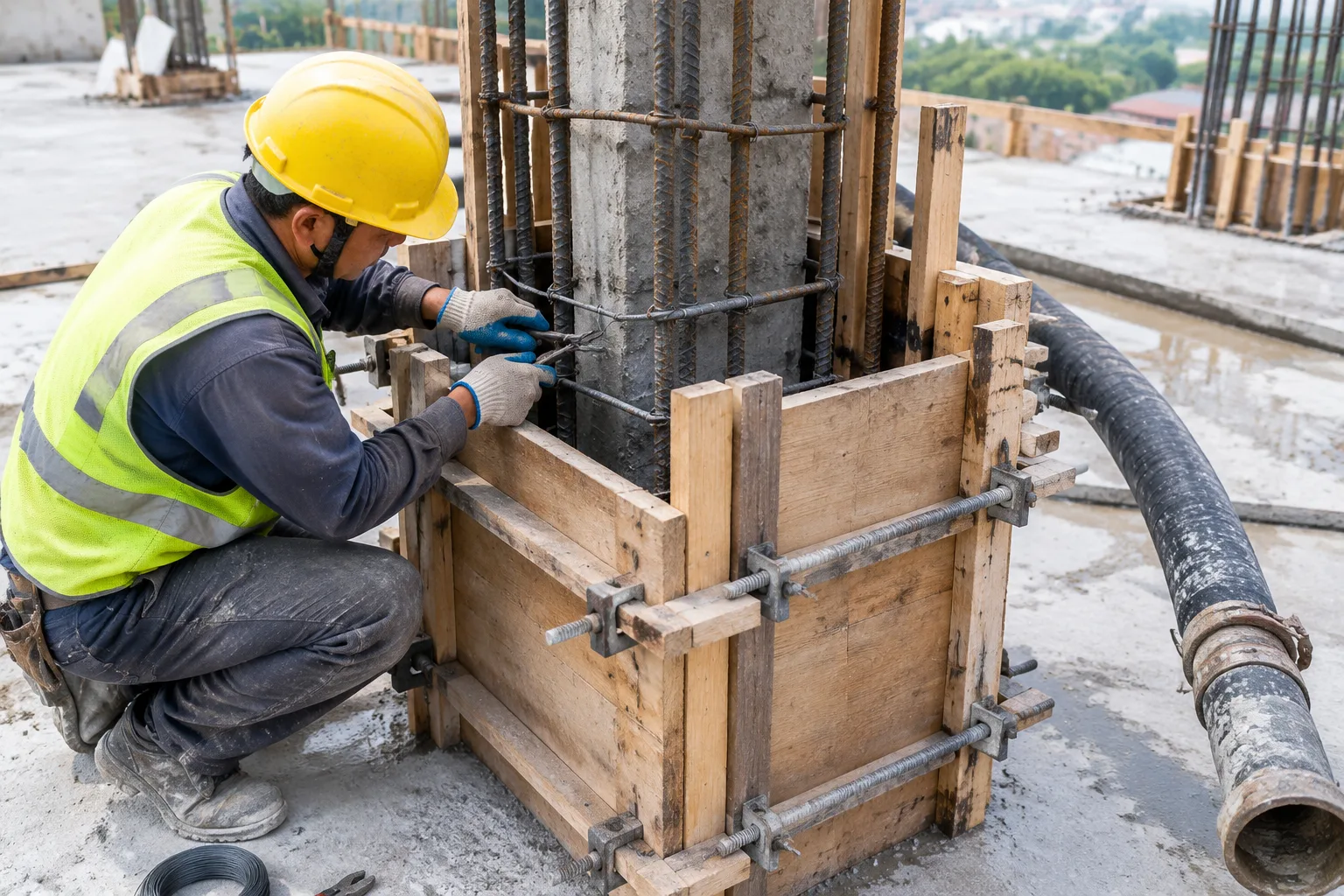 04
04Typical condition: Significant loss of concrete section, insufficient reinforcement or major load increase.
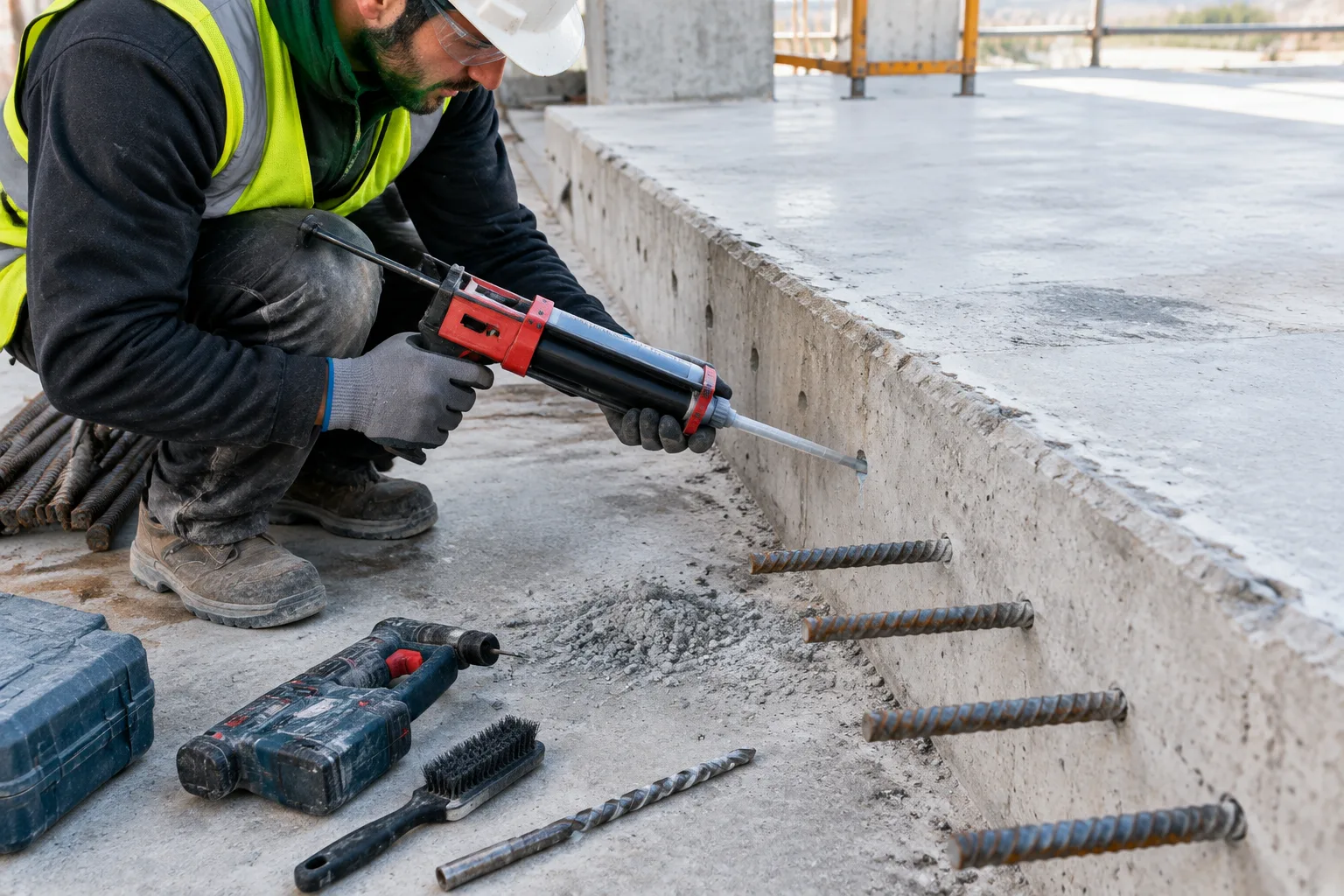 05
05Typical condition: New members, extensions or connections need reliable reinforcement anchorage into existing concrete.
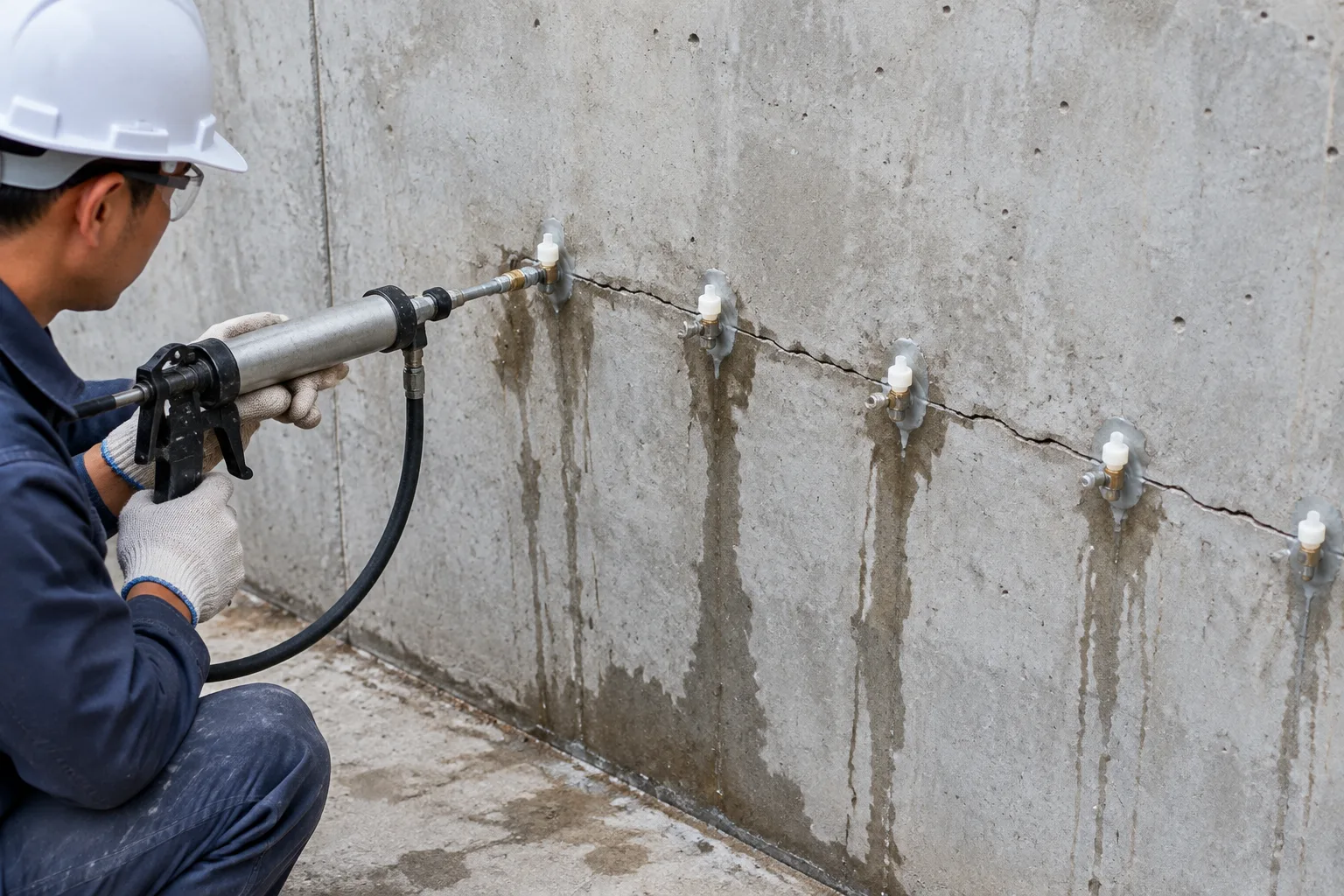 06
06Typical condition: Active or dormant cracks, water ingress, honeycombing or corrosion-related deterioration.
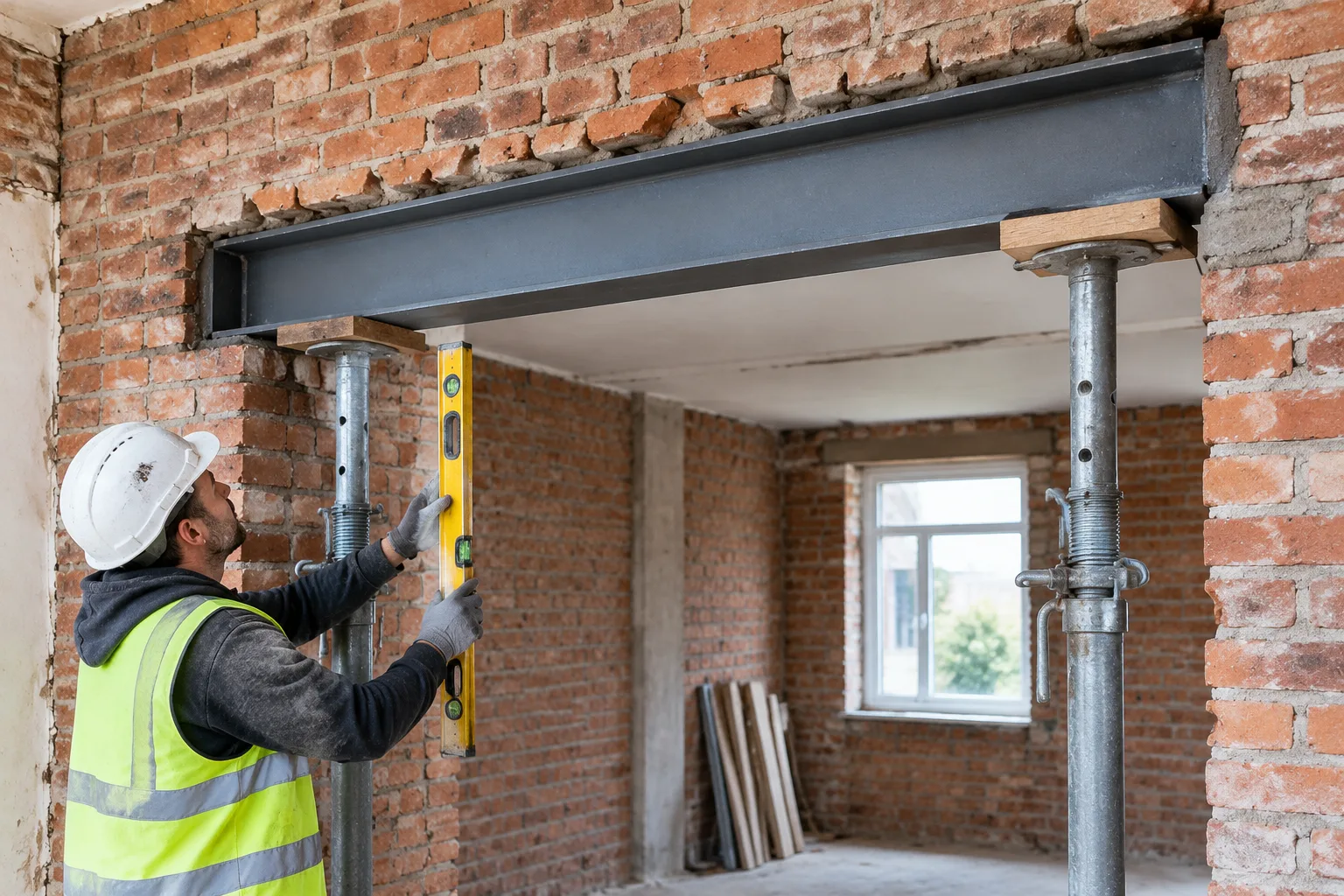 07
07Typical condition: A load-bearing wall must be opened or removed to create a beam-supported layout.
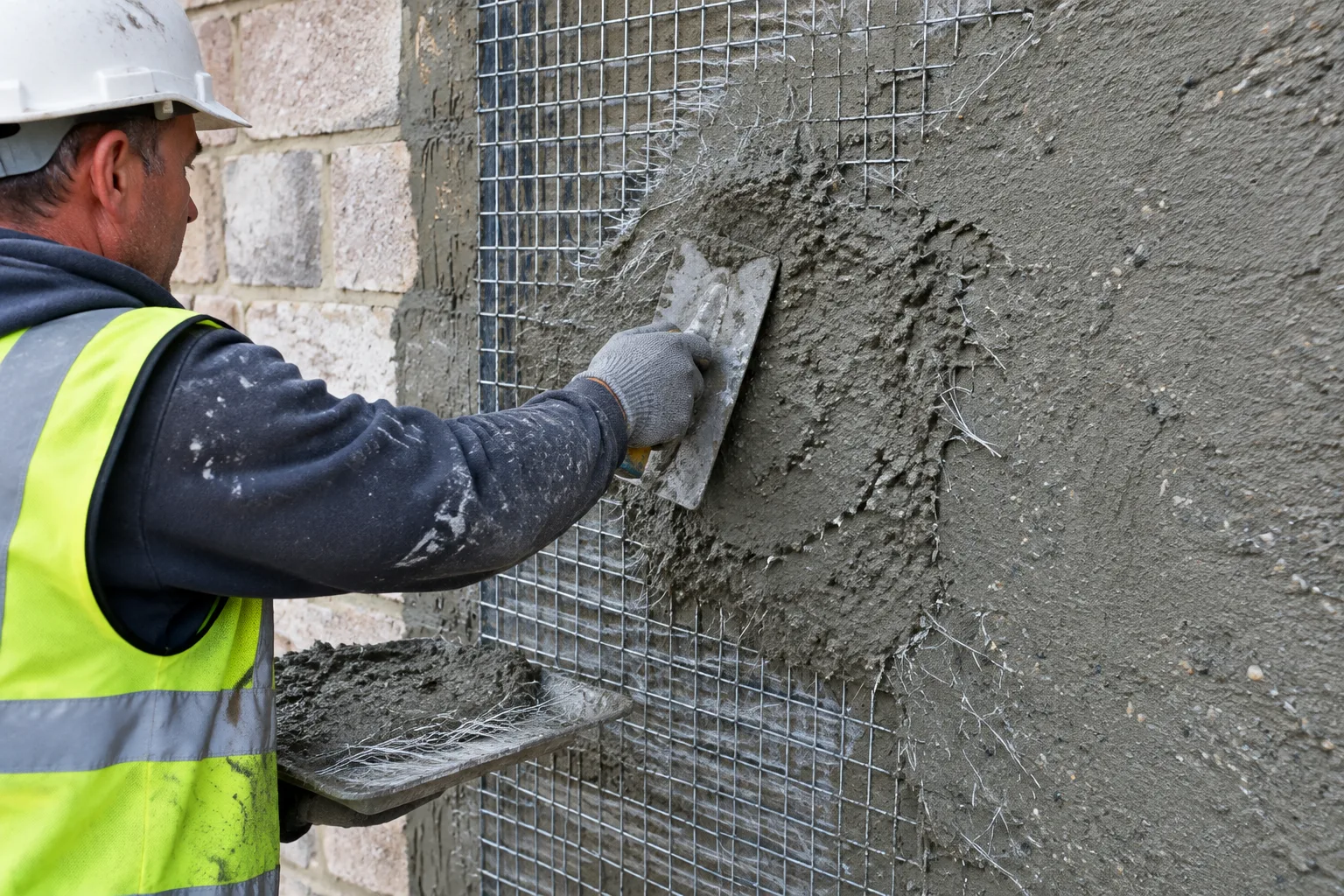 08
08Typical condition: Seismic, impact or movement-prone zones require improved deformation tolerance and crack control.
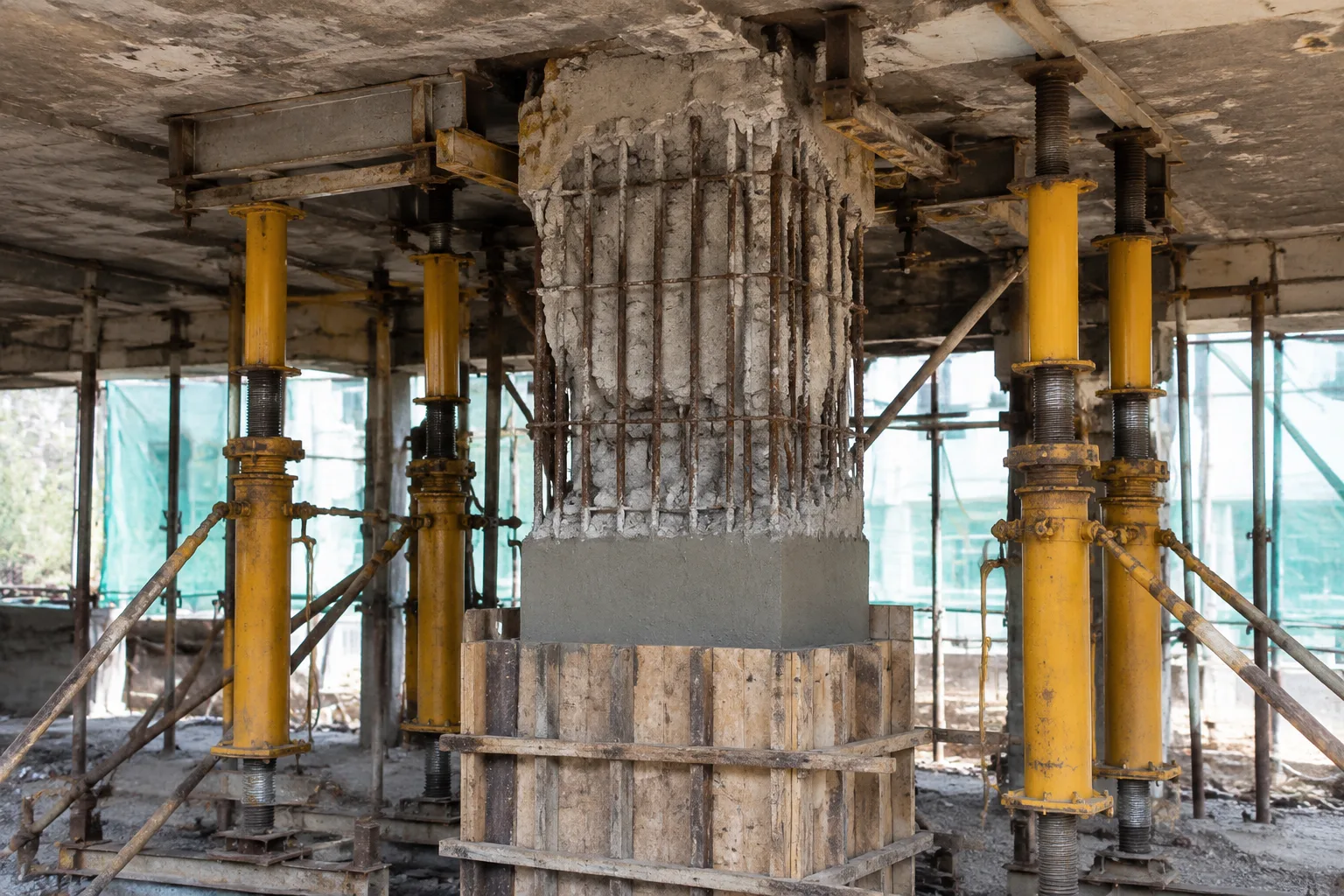 09
09Typical condition: A column has severe crushing, corrosion or loss of section and requires staged replacement.
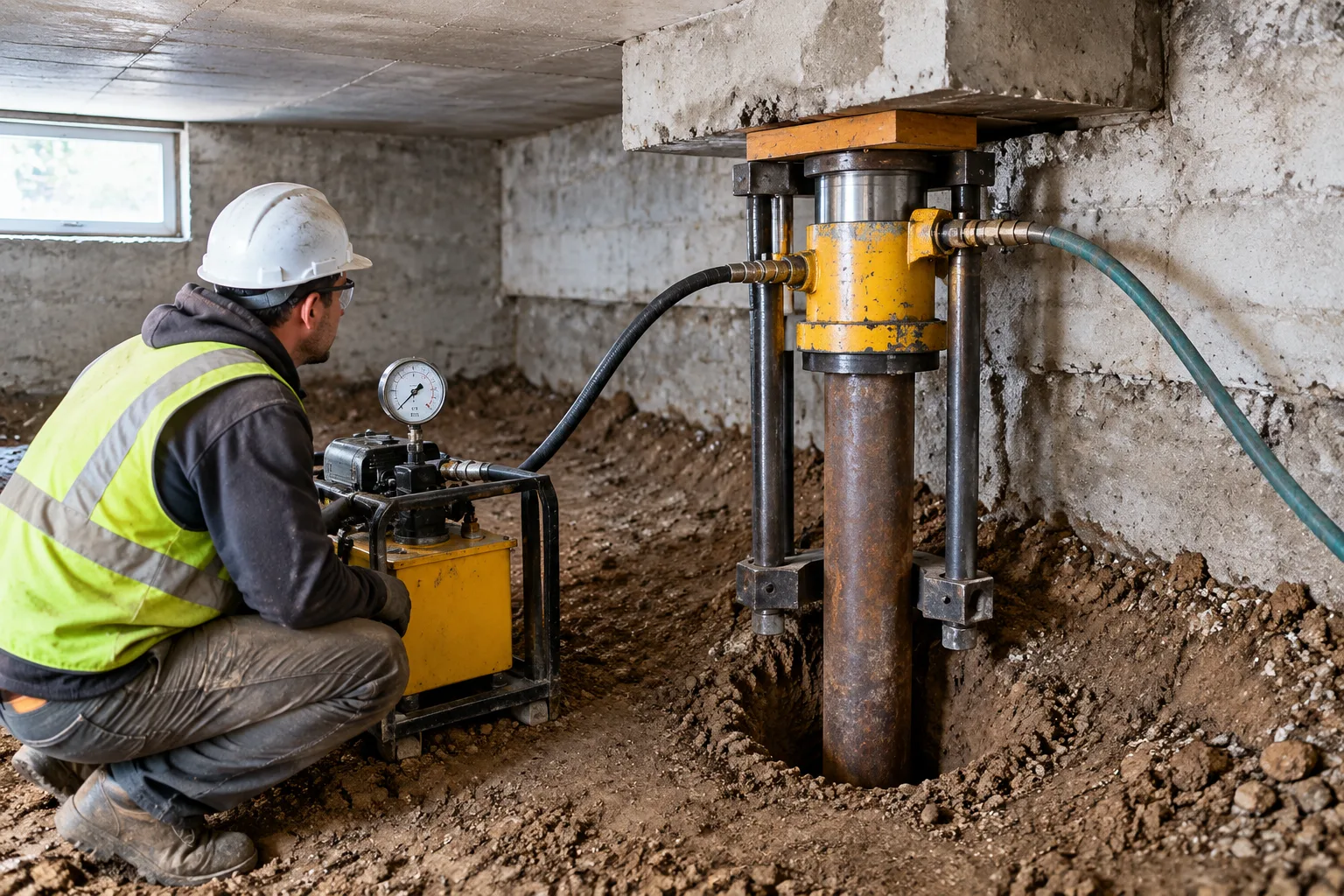 10
10Typical condition: Foundation settlement, insufficient bearing capacity or restricted-access underpinning where low vibration and compact equipment are required.
Common defects & change-of-use
Typical symptoms and treatment routes are grouped by structural system. Final solutions require site inspection, testing and engineering review.
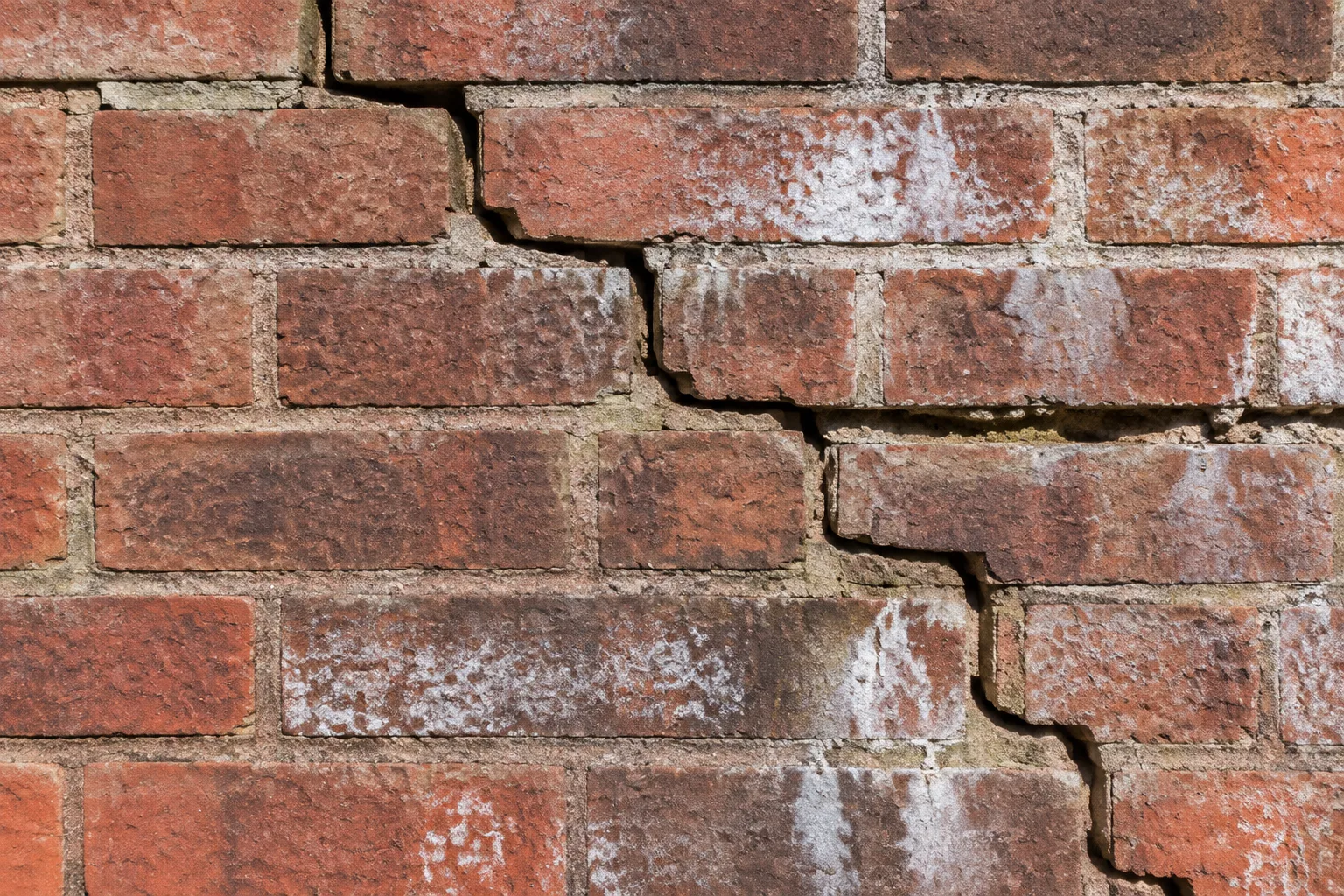 01 · Masonry structures
Diagonal, stepped and vertical compression cracks; weathered or powdery masonry; failed mortar joints; hollow finishes; dampness and salt efflorescence; missing ties; wall movement and inclination.
Crack injection, pressure grouting, high-ductility concrete overlays, new wall ties, structural or buttress columns, correction and re-alignment, load-bearing wall support and controlled rebuilding where deterioration is severe.
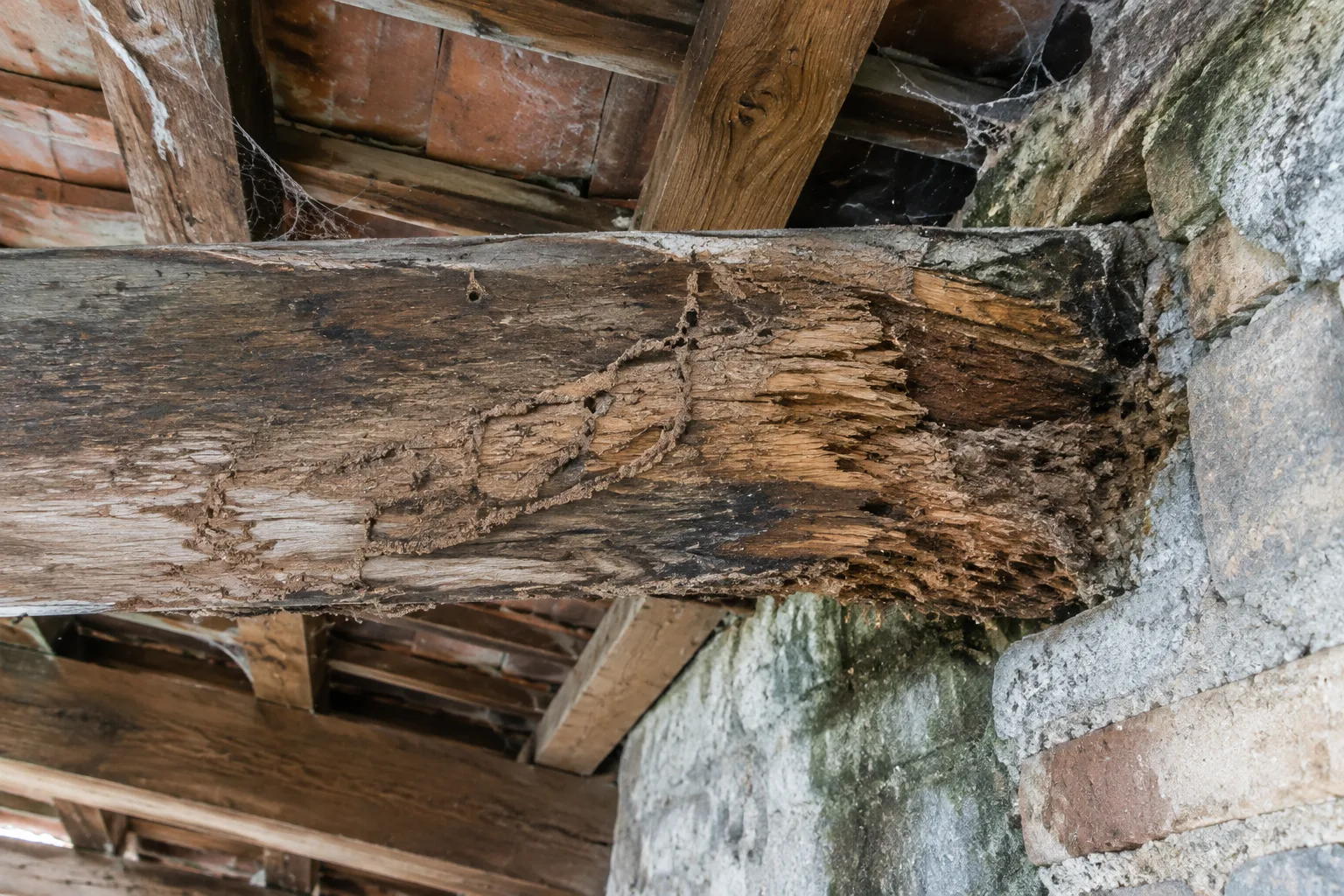 02 · Timber structures
Moisture-softened or decayed members, termite attack, section loss, splitting, excessive deflection, loose joints and decay where timber bears on damp masonry.
Moisture-source control, local member repair or replacement, steel plate or section reinforcement, connection strengthening, added supports, preservative treatment and improved separation from damp masonry.
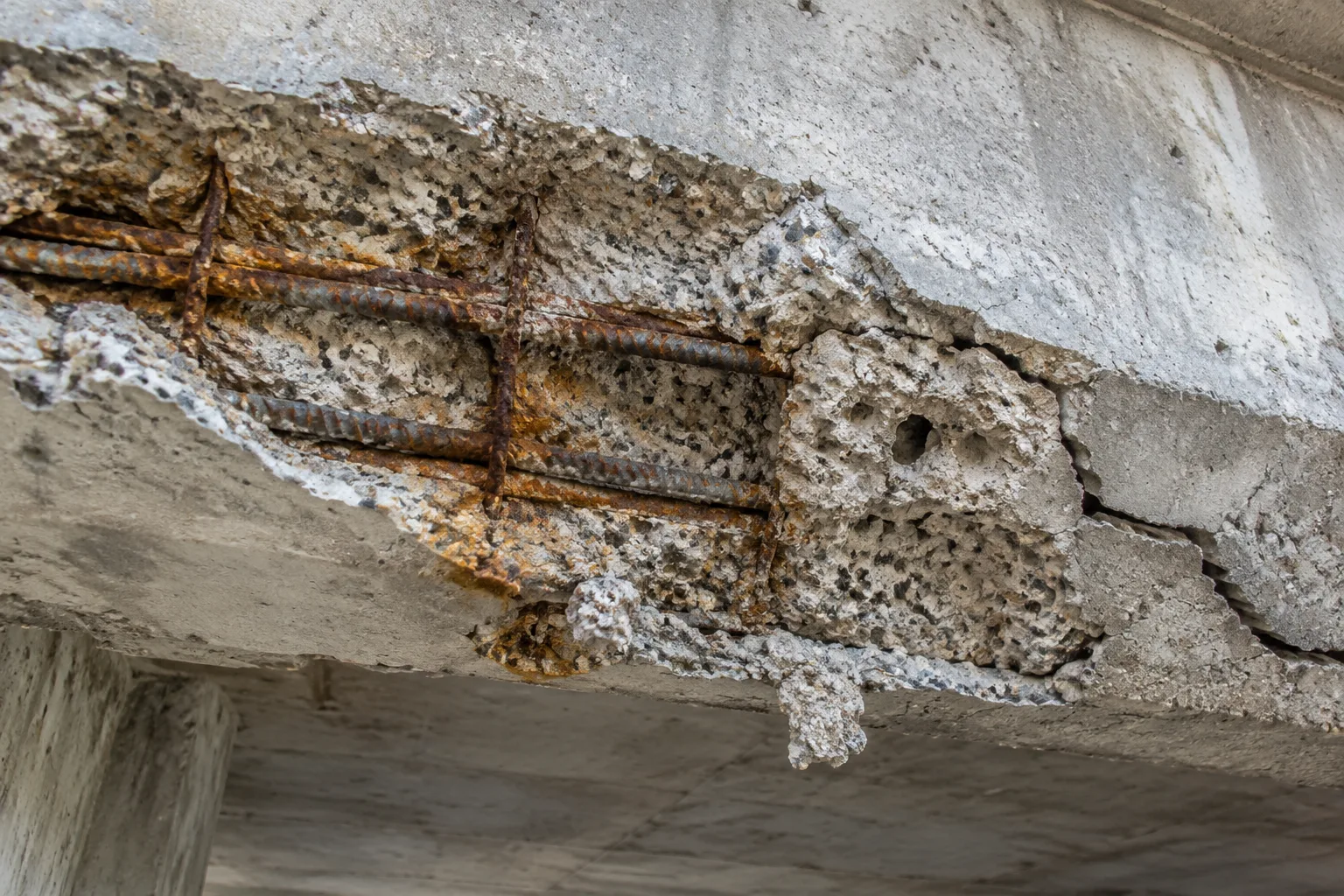 03 · Reinforced-concrete frames
Beam and slab cracking, column crushing, concrete spalling, exposed or corroded reinforcement, excessive deflection, honeycombing, weak joints and insufficient seismic detailing.
Crack injection, concrete repair, CFRP or bonded steel strengthening, section enlargement, rebar anchoring, column jacketing or staged concrete replacement, joint strengthening and corrosion protection.
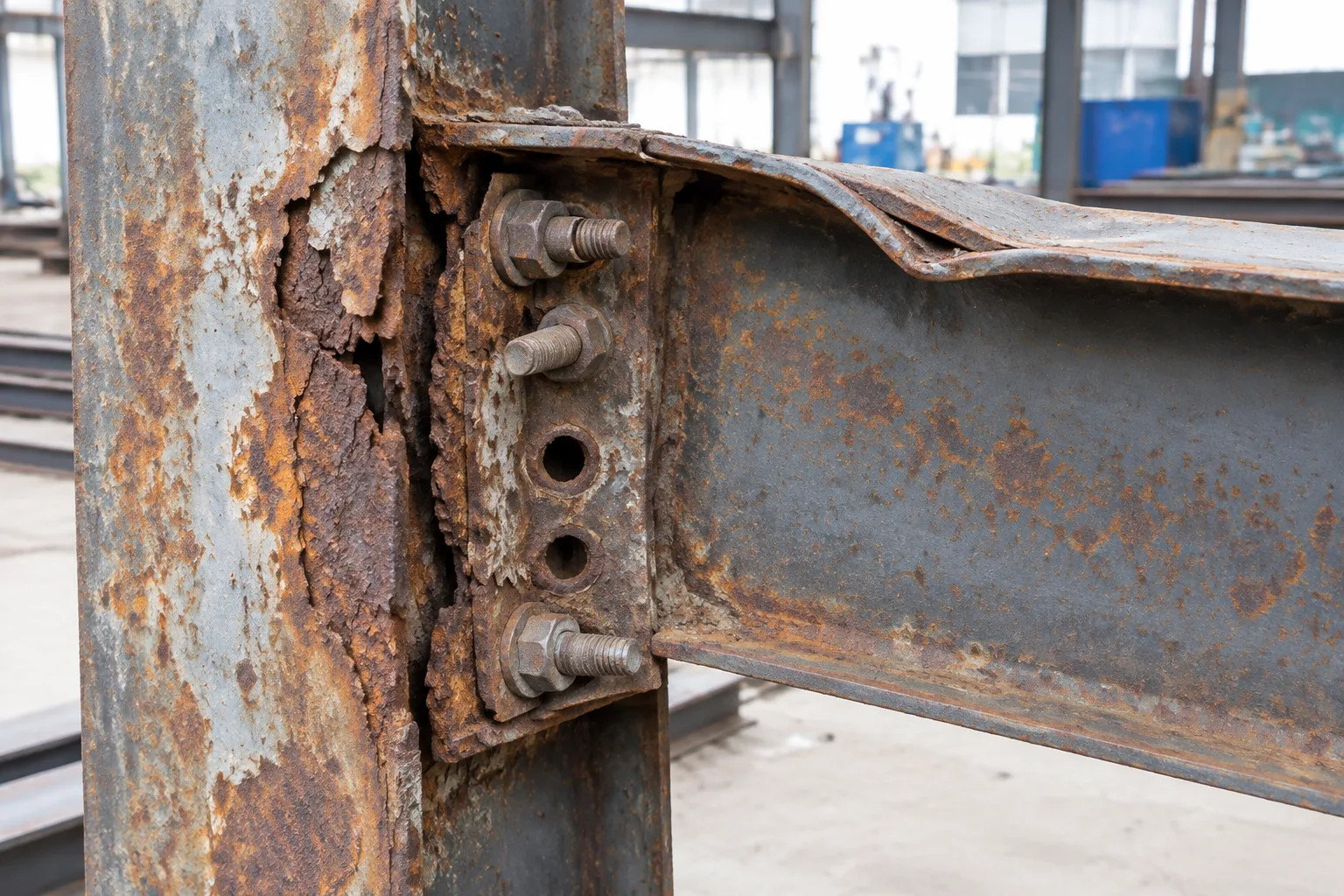 04 · Steel structures
Corrosion and section loss, deflected members, local buckling, fatigue cracking, loose bolts, poor welds, damaged connections and insufficient capacity for new rooftop or equipment loads.
Corrosion removal and protection, bolted or welded strengthening plates, member replacement, added bracing, connection upgrades, purlin reinforcement, load redistribution and controlled temporary support.
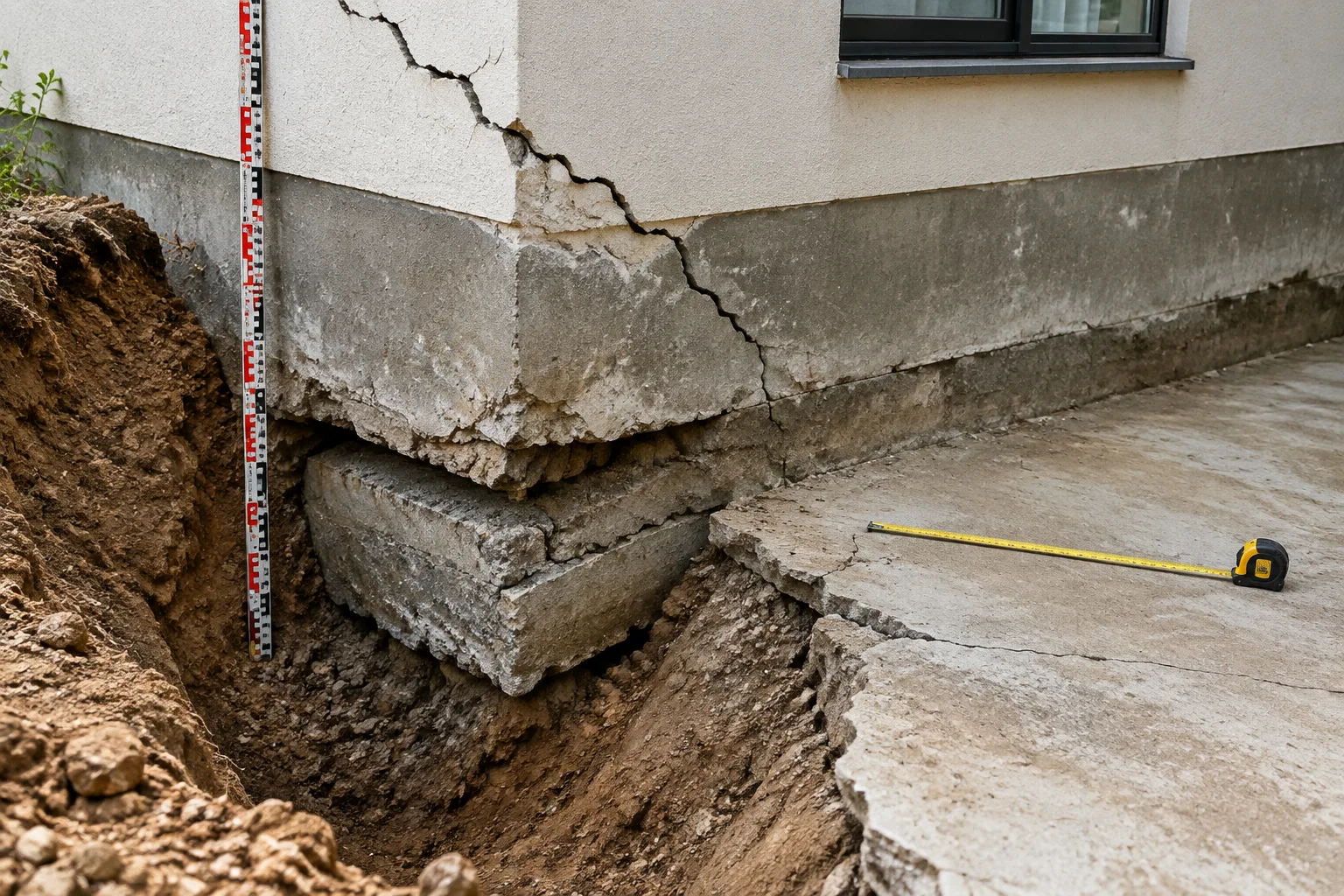 05 · Foundations
Differential settlement, diagonal wall cracking, uneven floors, footing rotation, inadequate bearing capacity, erosion, water-related soil softening and foundation concrete deterioration.
Ground and drainage investigation, underpinning, footing enlargement, micropiles or local support, pressure grouting, reinforced-concrete repair, settlement monitoring, correction and structural re-levelling.
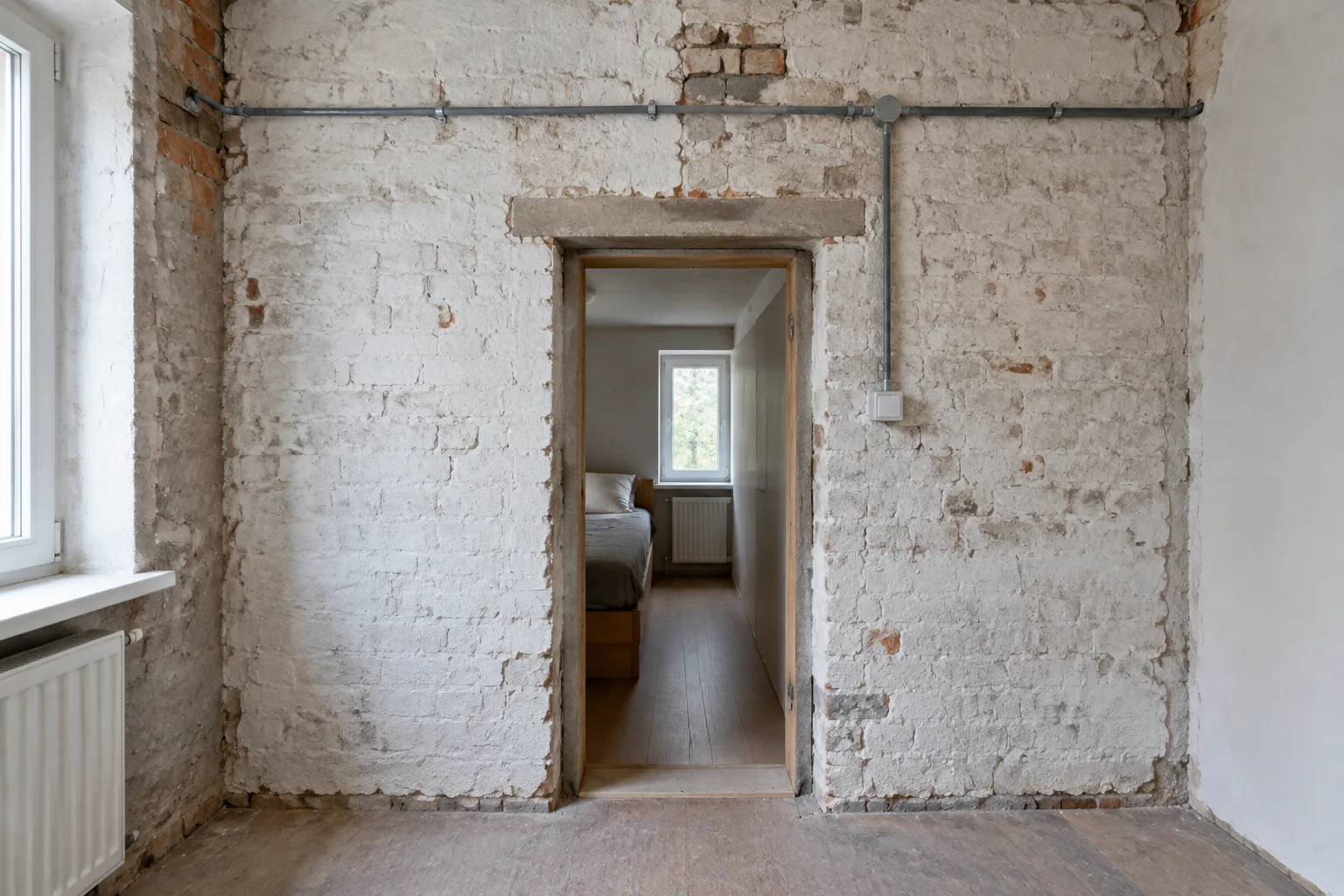 06 · Space expansion & change-of-use
Removing load-bearing walls, creating larger openings, changing room layouts, connecting spaces, adding floors or equipment and adapting buildings to a new commercial or institutional use.
Temporary propping, transfer beams and frames, load-path verification, wall replacement with beams, new columns, local foundation strengthening, phased demolition and monitored construction.
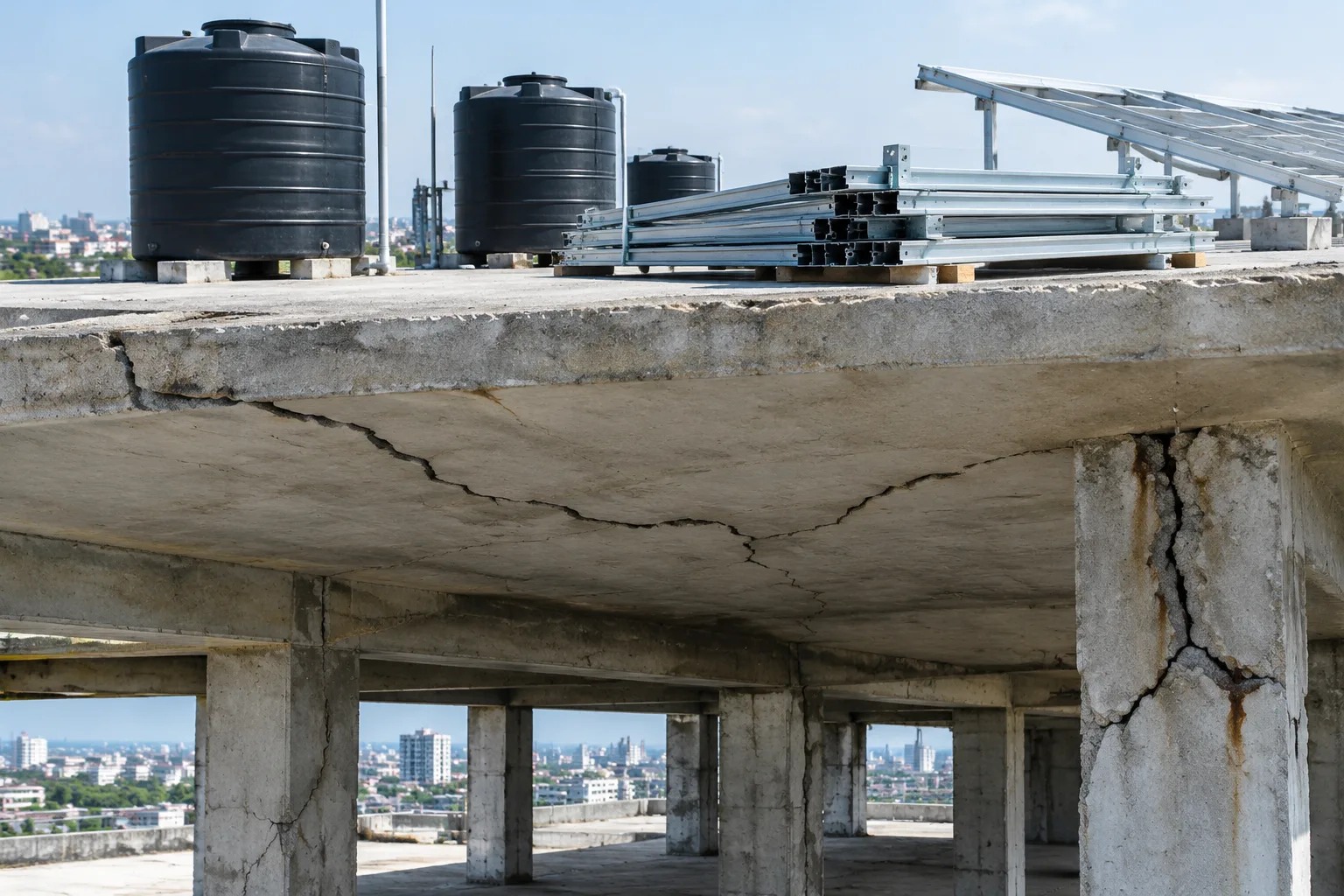 07 · Load-capacity upgrades
Higher storage, occupancy, machinery, solar-panel, water-tank or rooftop loads; changed design use; excessive vibration; or existing members that do not satisfy the required capacity.
CFRP strengthening, bonded or encased steel, section enlargement, added reinforcement and supports, steel-member upgrades, foundation strengthening, load redistribution and verification testing.
Materials, brands & specialist equipment
Final brands and product grades are selected against the engineer's specification, substrate condition, test requirements and verified local availability.
 Inspection equipment
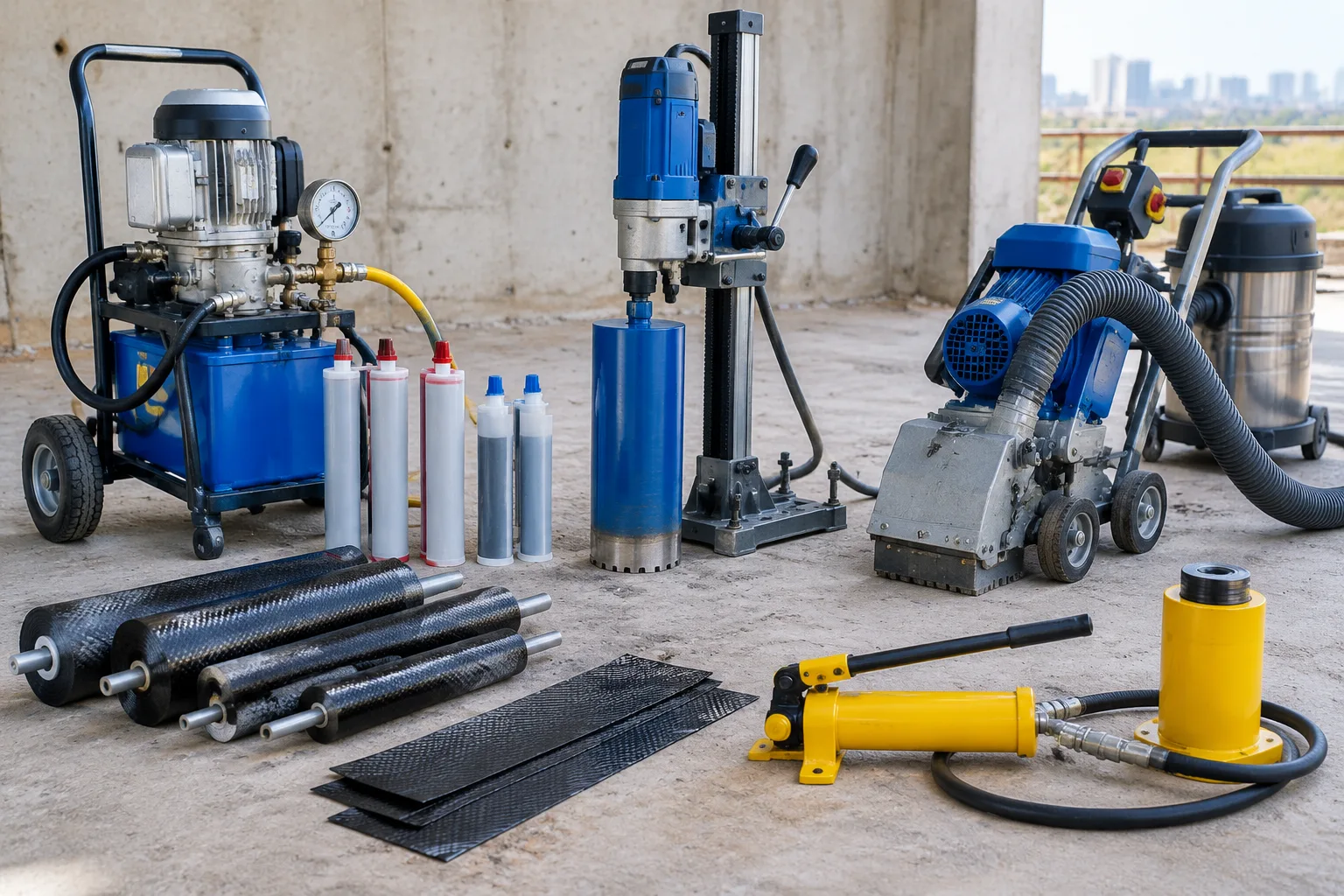 Strengthening equipment
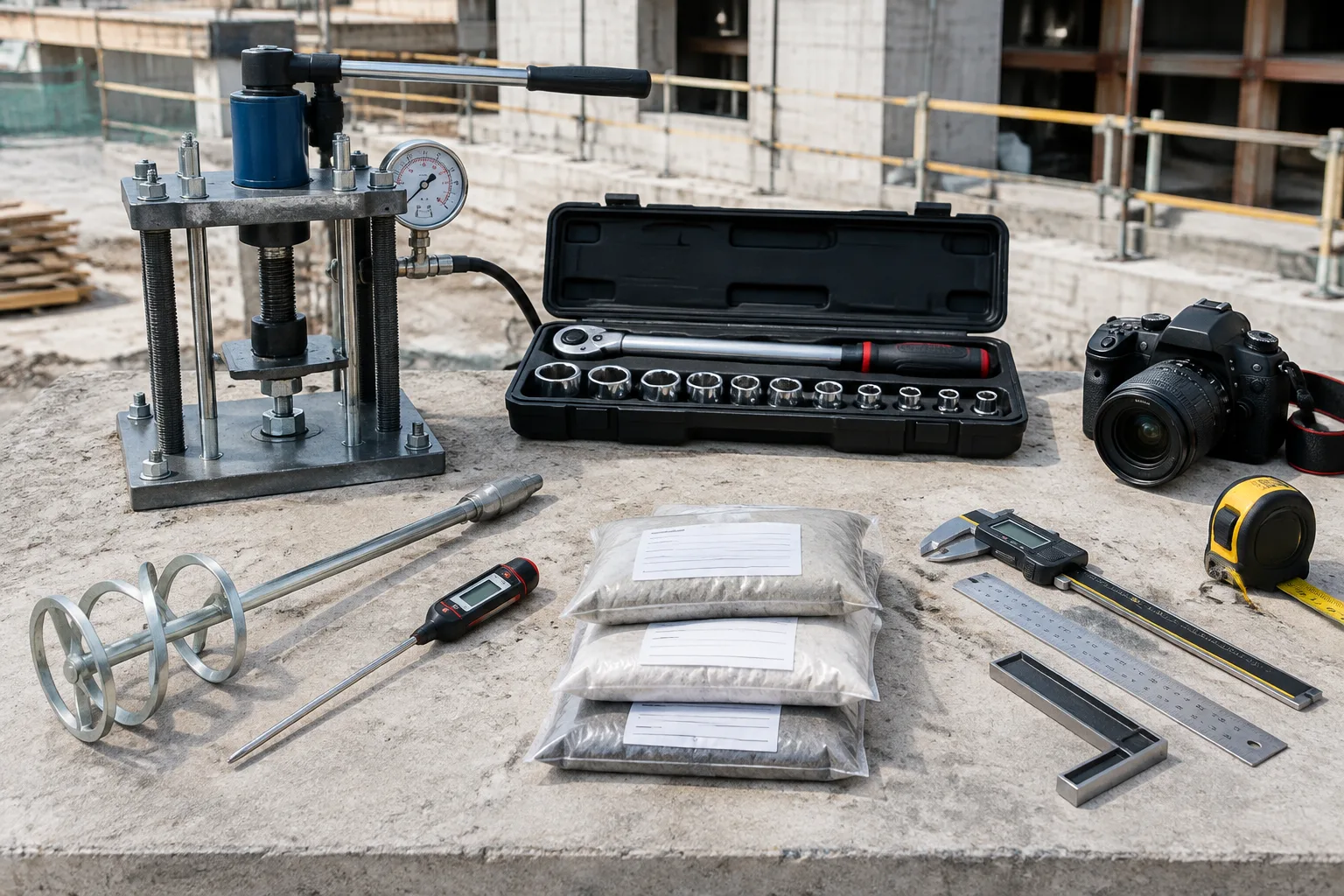 Quality-control equipment
Brand references indicate representative system capability and do not constitute an exclusive supply commitment. Products remain subject to project approval and procurement availability.
Selected experience
Representative strengthening methods, workmanship and regional application scenarios. Individual project names and precise locations are intentionally not disclosed.
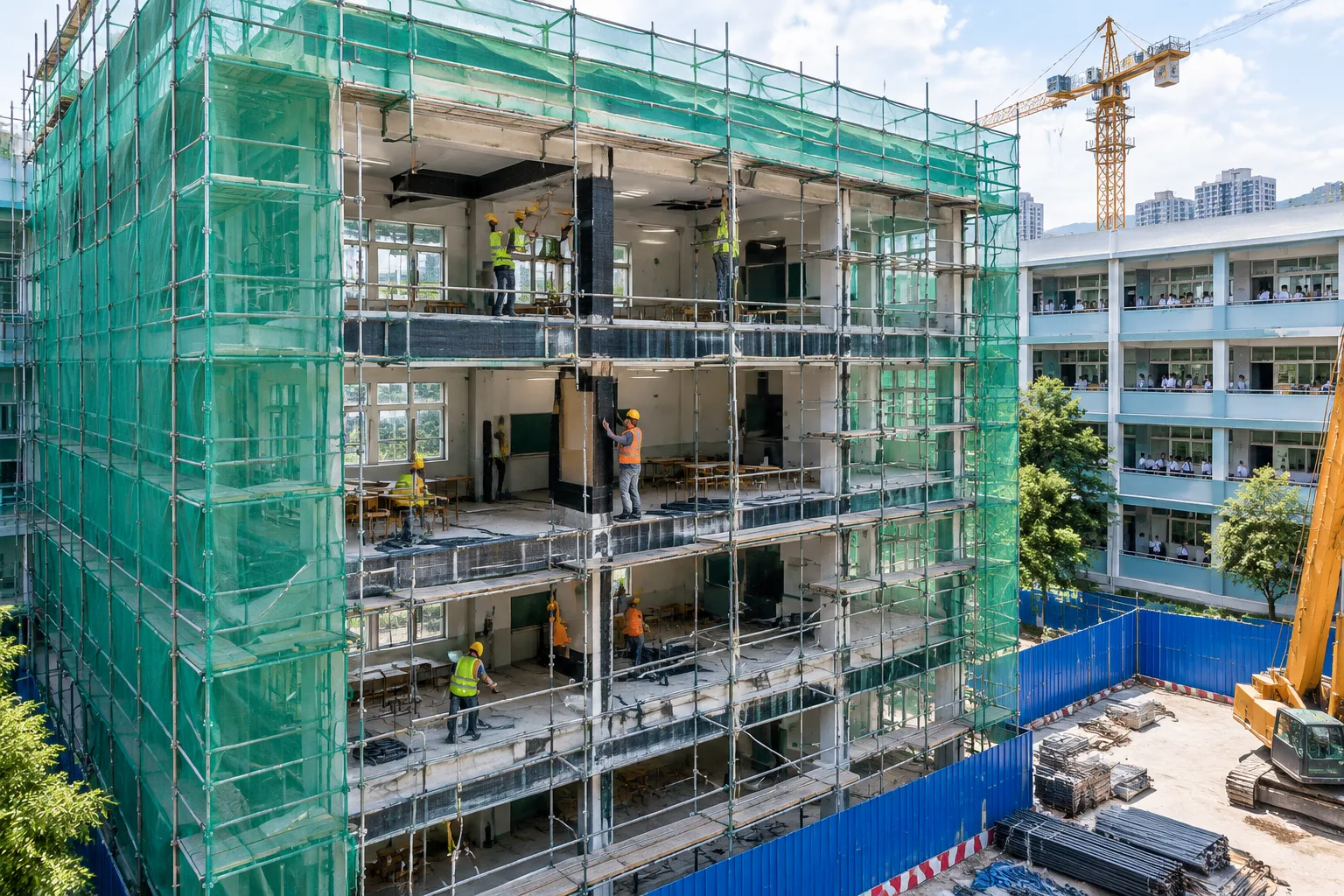
School renovation & seismic strengthening
Renovation and strengthening of existing teaching buildings while parts of the campus remained operational. The works improved structural capacity, seismic performance and the spaces required for updated teaching functions.

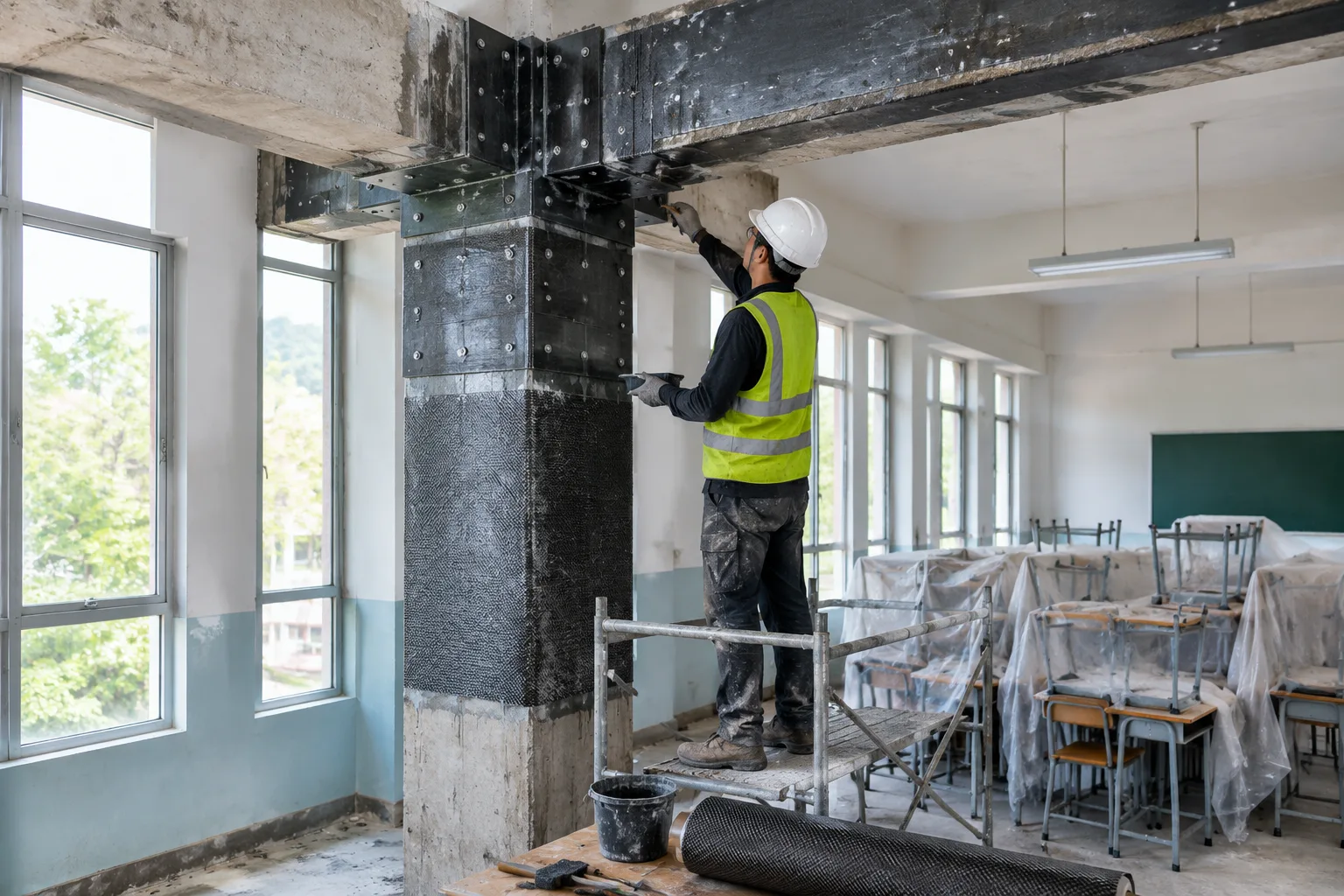
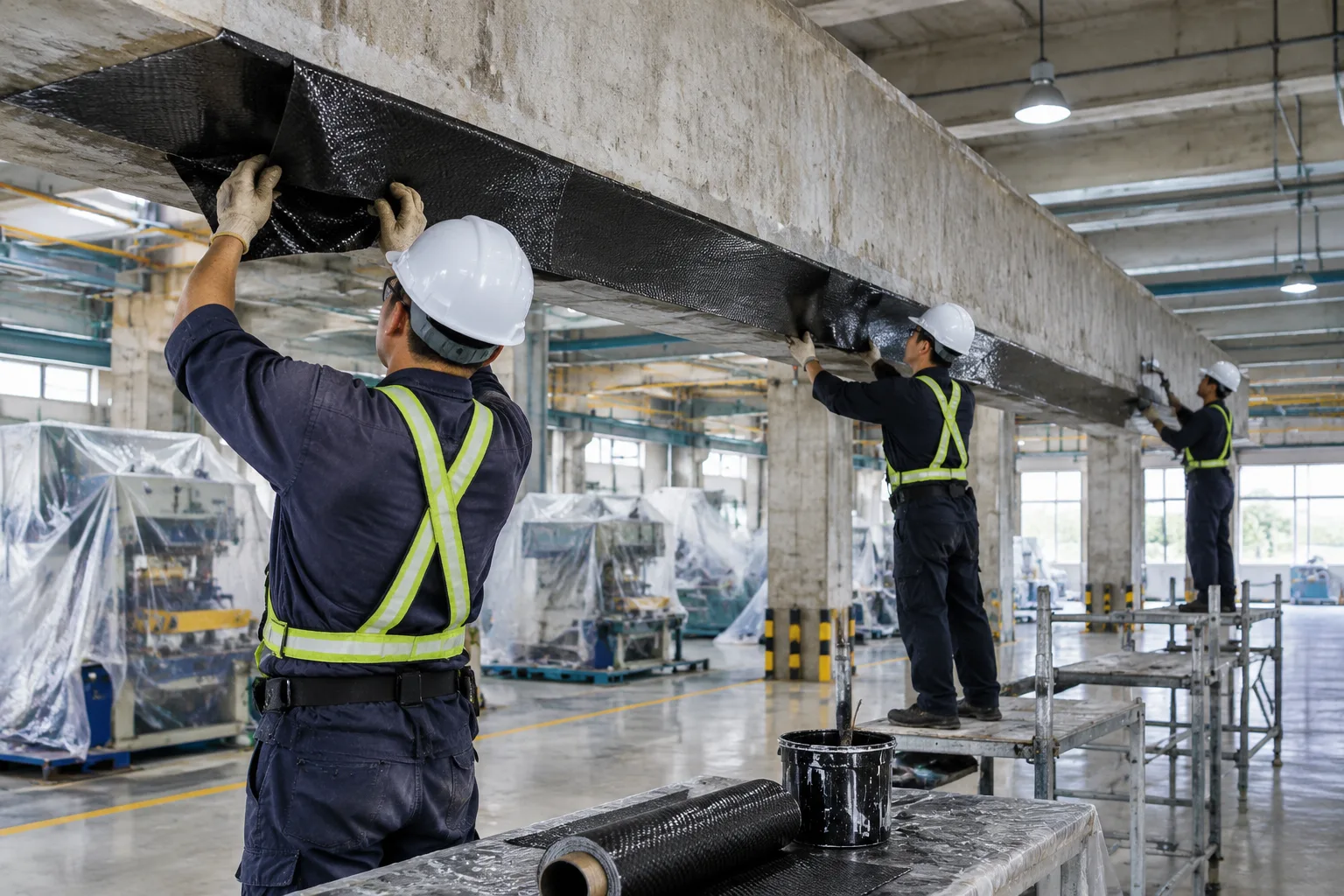
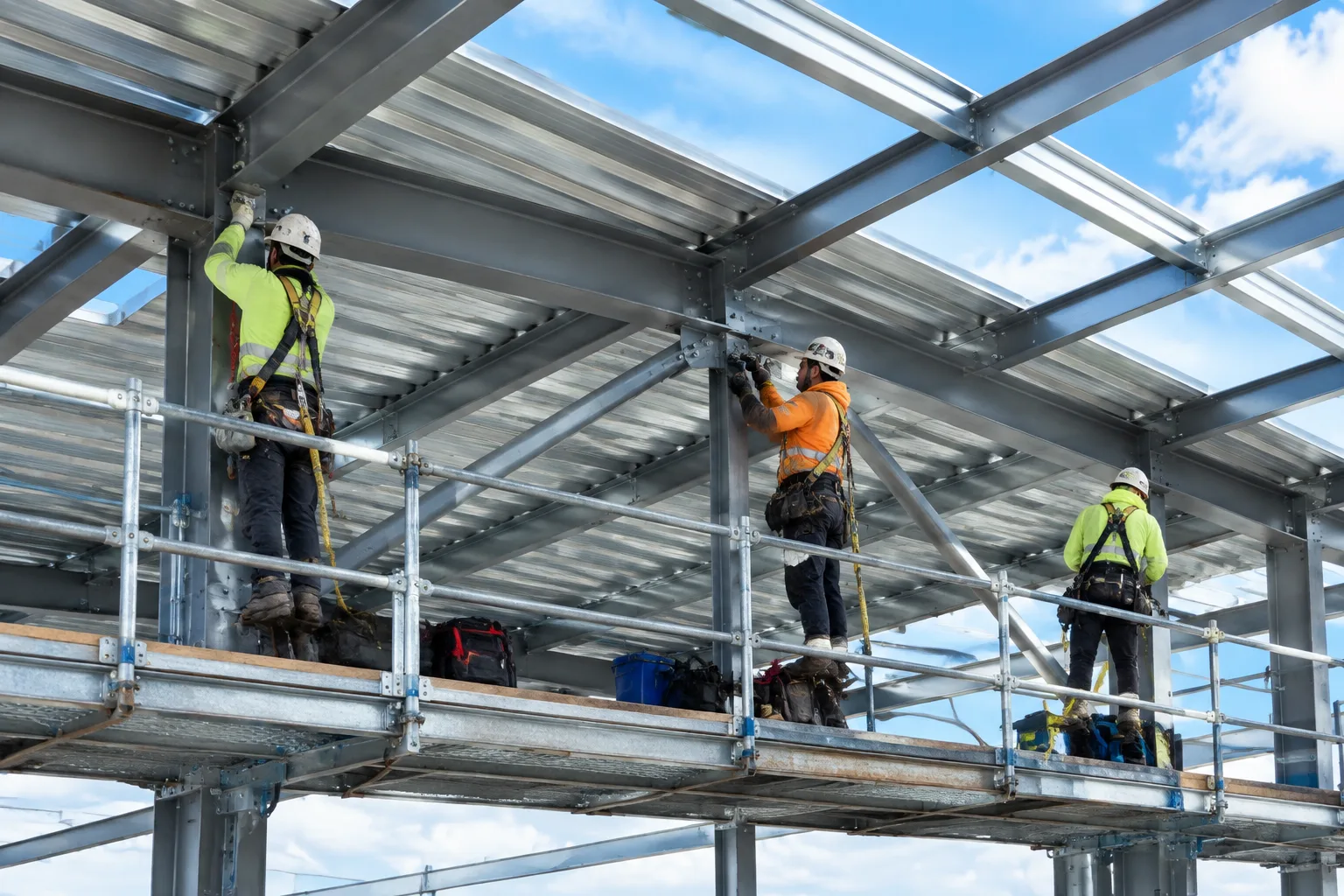
Representative project and application imagery. Individual project names and locations are intentionally not disclosed.
Integrated delivery
One team keeps the technical decisions, site conditions and workmanship aligned from the first survey to final handover.
Survey the structure, map defects, verify dimensions and identify the root cause.
Condition report • Test plan • Photo recordsDevelop a practical strengthening scheme, method statement and coordinated scope.
Engineering concept • Details • Material scheduleInstall, inspect and document the approved works with controlled site delivery.
HSE controls • Hold points • Handover fileBuilding type, observed problem, location, urgency and available drawings.
Condition survey, measurements, photographs and testing requirements.
Local registered-engineer input, strengthening concept, scope and budget.
Approved materials, method statements, HSE controls and inspection points.
Testing, photographic records, completion documents and maintenance advice.
Why choose us
HY Structural Reinforcement Engineering Limited focuses on specialist strengthening and rehabilitation rather than treating structural work as ordinary building maintenance. Our local and international team combines condition assessment, engineering design, material selection, site supervision and documented quality control.
We identify the structural cause before selecting a repair.
Inspection, design and construction decisions stay coordinated.
Hold points, temporary works and records reduce avoidable site risk.
Kenyan professionals and project stakeholders remain close to delivery.
Why specialist experience matters: Structural strengthening involves load paths, temporary support, material compatibility and hidden defects. If carried out by a non-specialist contractor without proper assessment and design, the work may conceal damage, overload adjacent members, create unsafe temporary conditions, fail prematurely or expose the owner to approval and liability risks.

Start with the problem
Send the location, building type, photographs and a short description. We will help identify the appropriate next step.